Take Up Your Cross: What Mark 8:27-38 Says About Following Jesus as Messiah
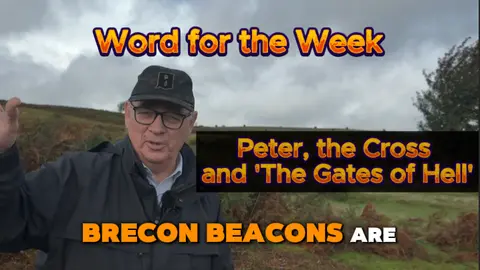
Recorded out on Mynydd Illtud, with the Brecon Beacons somewhere behind me and the weather doing its best to make the point that hills are not always friendly places, this week’s Word for the Week takes us into Mark 8:27-38.

There's a problem I see in the chapels of rural Wales.
Over the last century a generous-sounding liberal theology worked its way into many of them.
It sounded open, but it was a narrower faith dressed up as a wider one.
The buildings were left standing, the singing survived, and the counting of the cost of following Jesus quietly drained away.
Mark 8 is where Jesus does the counting out loud.
The turning point of Mark’s Gospel
Mark 8 is the hinge of the Gospel. Up to here the question has been who Jesus is. Peter answers it in verse 29. From here on the question becomes what following him means.
Following the Messiah is not the same as following a leader of your own design. It means following him on the way of the cross, and in the chapters ahead that way gets harder for him, not easier.
Many of the chapels I see in the course of my work know Jesus’s job title. He is the Messiah, the Christ.
What they do not always reckon on is the job description that comes with it.
A pagan place for a searching question
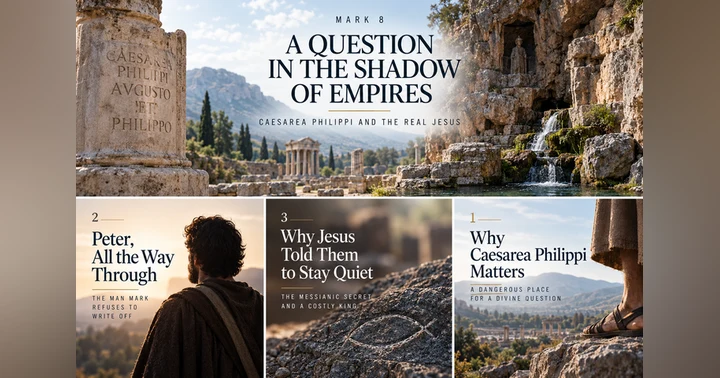
Mark tells us exactly where this episode in Mark's Gospel happens: the villages of Caesarea Philippi.
Not Jerusalem.
This is the far north, at the foot of Mount Hermon, in Herod Philip’s territory.
The city was built to honour Caesar Augustus and was famous for a shrine to the god Pan cut into the rock. The pagan imagination of the day saw the cave and the spring there as a gateway to the underworld, 'the gates of Hades', and acts of worship happened there that Scripture would call detestable.
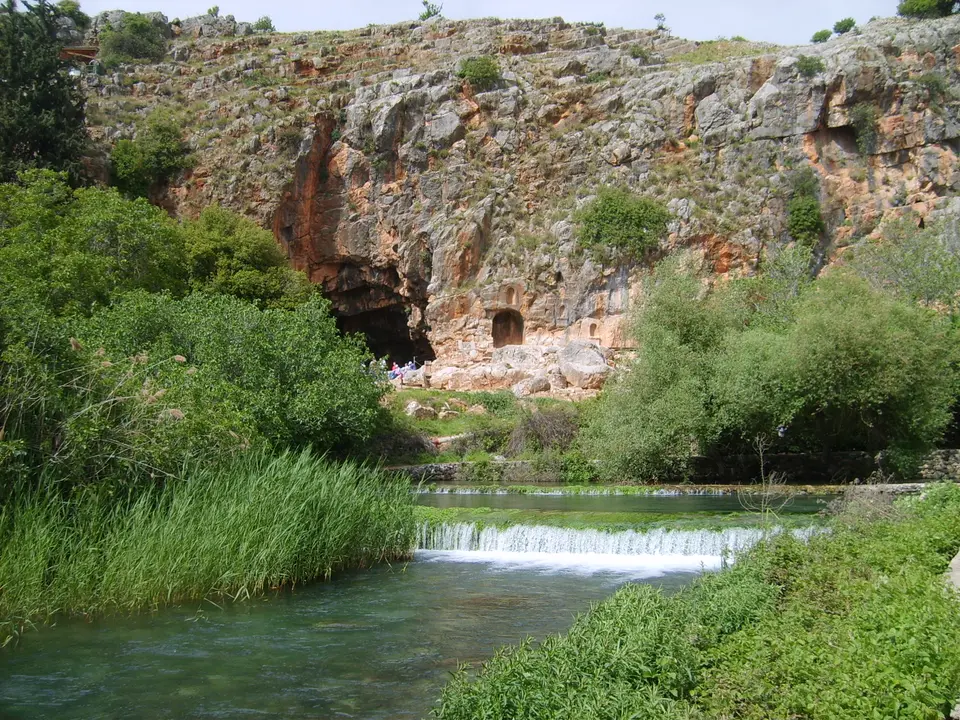
Photo by gugganij - Own work, CC BY-SA 3.0, https://commons.wikimedia.org/w/index.php?curid=3992796
The location is still there today, in the Golan Heights, at a place called Banias.
Mark wants us to realise all of that before Jesus says a word.
Matthew’s parallel account has Jesus speaking of building his church on a rock and the gates of hell not prevailing against it. It is an interesting thought that the cliff face may have been right in front of them. I will leave you to weigh that.
Two questions
Jesus asks a double question in that place.
First, to the group: “Who do people say that I am?”
Then he narrows it to the Twelve: “Who do you say that I am?” In the Greek the “you” is pushed forward for emphasis.
This is not the same question twice. It moves from a survey of opinion to an interrogation.
The crowd’s answers (John the Baptist, Elijah, one of the prophets) are respectable and impressive and noncommittal. They are all attempts to fit Jesus into a box that already exists, and none of the boxes fit.
Peter breaks the pattern: “You are the Christ.” Modern editions of the Greek text are right to put a full stop there. What follows in the passage is exactly what fills that gap.
Half the memo
Jesus immediately silences the news. He strictly charges them to tell no one, using the same verb Mark uses for silencing demons. In Roman-loving Caesarea Philippi, “Christ” meant conquest and armed rebellion.
Then comes verse 31, the turning point of the whole Gospel. He began to teach them that the Son of Man must suffer, be rejected by the leaders, be killed, and after three days rise again. Not a possibility, a requirement. One breath, one sentence: yes, I am the Christ, and this is what must happen. Peter only got half the memo, bless him.
Get behind me
Peter rebukes Jesus, using the very word Jesus had just used to silence the crowd. Jesus answers: “Get behind me, Satan.” It is among the sharpest words he speaks to anyone.
But notice the wording. “Behind me” echoes the call to discipleship in Mark 1:17, “follow after me.” It may be that Jesus is not simply throwing Peter out but telling him to get back into position as a follower, not a director. I put that forward as a possibility rather than a certainty, but the echo seems deliberate.
Four contrasts, one hinge
Jesus then widens the circle and calls the crowd as well. These are not contrasts I am reading into the text. They are built into it.
- Human opinion against direct confession. “People say” against the emphatic “you say.”
- A conquering Christ against the suffering Son of Man. Peter’s word, “Christ,” sits three verses from Jesus’s own preferred title, which carries Daniel 7:13-14 with it: one like a son of man given a kingdom that will never be destroyed. The Son of Man who suffers in verse 31 and the Son of Man who comes in glory in verse 38 are the same figure.
- Saving life against losing it. The one Greek word psuche does double duty: self-preservation on one side, true self on the other. The grip that feels like safety is how you lose what you were protecting. The open hand that feels like loss is how you keep it.
- Shame now against glory later. Social safety is not a neutral choice.
All four are resolved in one place, at the cross, which Jesus is already walking towards.
The cross shows Peter what his own word “Christ” actually meant. It is not a detour to victory but how victory happens. It is Jesus living out the very principle he has just stated, losing his life to save it, for many others as well. And it was the most shameful thing Rome could do to a person, which is exactly where Mark says the glory was.
Never jewellery
We have made “take up your cross” feel safe through two thousand years of devotional use. It was not safe. A cross was a Roman execution device for slaves and rebels, and carrying the beam through the streets was part o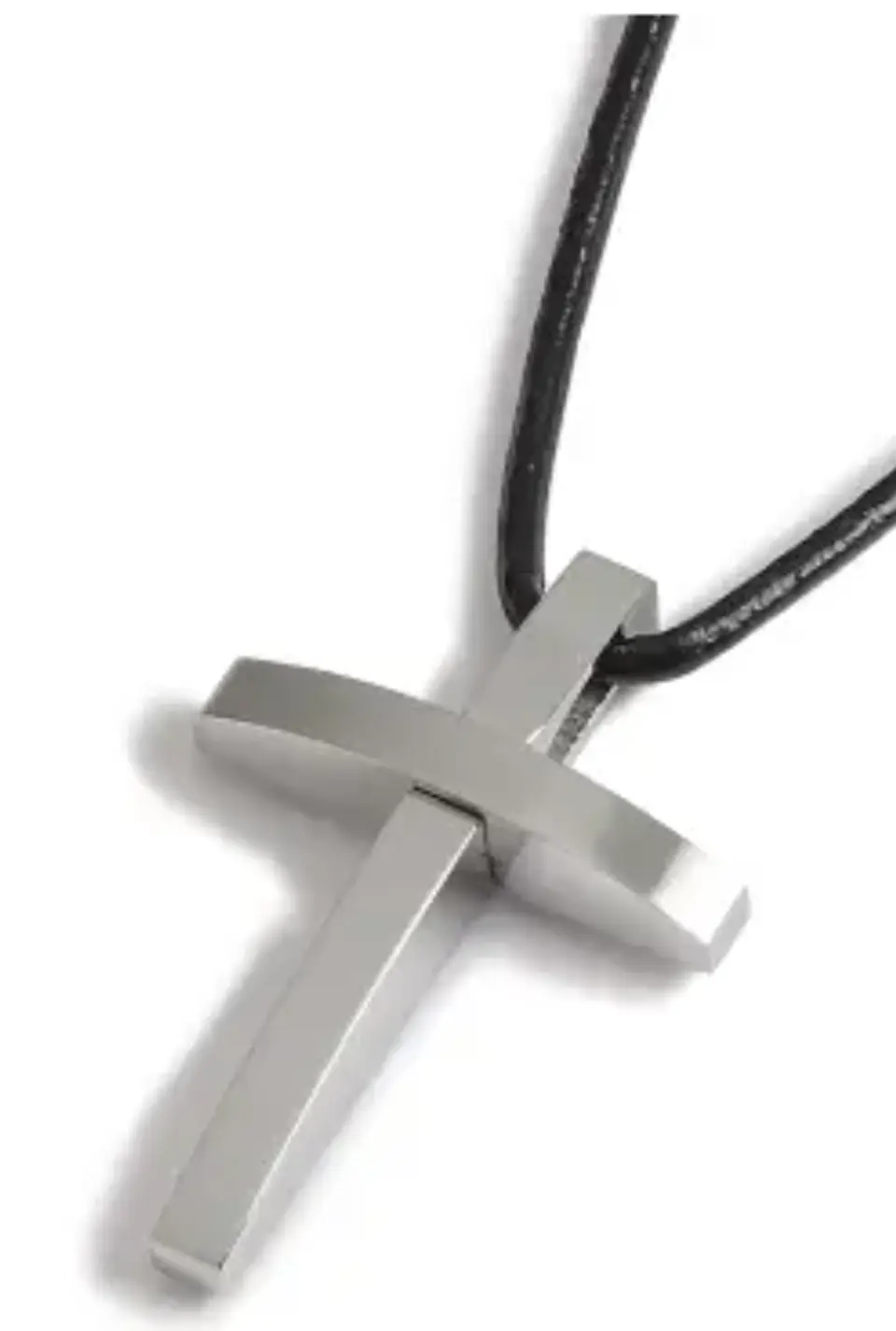
f the punishment. Nobody in that crowd heard the phrase and thought of jewellery. They pictured the road to execution.
And it is the same three commands for everyone in earshot, crowd and disciples alike: deny yourself, take up your cross, follow me. The word for “deny” is the same word Mark later uses of Peter’s denial in chapter 14. The man told to deny himself will instead deny Jesus. Yet Peter is not written out of the story. Chapter 9 still finds him there, still getting things wrong, still present. That is the honest position for anyone who can say something true about Jesus without yet having let it rearrange everything they expect him to be.
What survives and what does not
Wales has plenty of people who can say “you are the Christ” without missing a heartbeat. 'Of course ... we’re Welsh, yes we believe that!'
But the passage was never asking whether we understand the job title. It was asking what we do once we understand what the job description means.
In Wales, the singing survived. The buildings mostly survived. What did not survive in enough places was 'followership', (technically, 'discipleship') the costly, cross-shaped thing this passage describes.
Reflect on
- Where do you hear “Christ” as a title and not yet as a job description?
- Which of the four contrasts do you find hardest to live in?
- What would carrying a cross, not wearing one, look like in your week?
Scripture: Mark 8:27-38, with Mark 1:17 and Daniel 7:13-14
Rock, Empire and the Question That Changed Everything - Mark 8:27-38