Nicodemus in the Dark: What John 3:36 Actually Says
Nicodemus in the Dark: What John 3:36 Actually Says
There's a man in John's Gospel who arrives at night with a compliment and leaves with a question he can't answer. His name is Nicodemus, a Pharisee, a respected teacher, someone who has spent his whole adult life inside the categories of Jewish faith and law. He comes to Jesus carefully, under cover of darkness, and opens with generosity:
"Rabbi, we know you are a teacher come from God, for no one could do these signs unless God were with him."
Jesus doesn't take the compliment.
He answers a question Nicodemus hasn't asked: "Unless one is born again, he cannot see the kingdom of God."
And from there the conversation runs away from Nicodemus entirely.
He can't get past the literal sense of the words, asking how a grown man could climb back into his mother's womb.
By verse 11, Jesus has named the real issue plainly: "we speak of what we know, and testify to what we have seen, and you do not receive our testimony."
There's not a shortage of information here. There's a man being handed testimony from heaven and not letting it in.
This meeting happens right at the start of things too, worth noting, since John doesn't follow the same shape as Matthew, Mark and Luke.
It's the very first Passover of Jesus's public ministry, in Jerusalem, before any of the Galilean teaching most of us picture first when we think of Jesus's ministry.
Nicodemus isn't meeting a man with a settled reputation. He's meeting someone whose public work has only just begun, drawn in by the signs he's seen, still hedging his bets.
Jesus wraps the whole conversation up with a single sentence that's worth slowing right down for:
"Whoever believes in the Son has eternal life; whoever does not obey the Son shall not see life, but the wrath of God remains on him." (John 3:36, ESV UK)
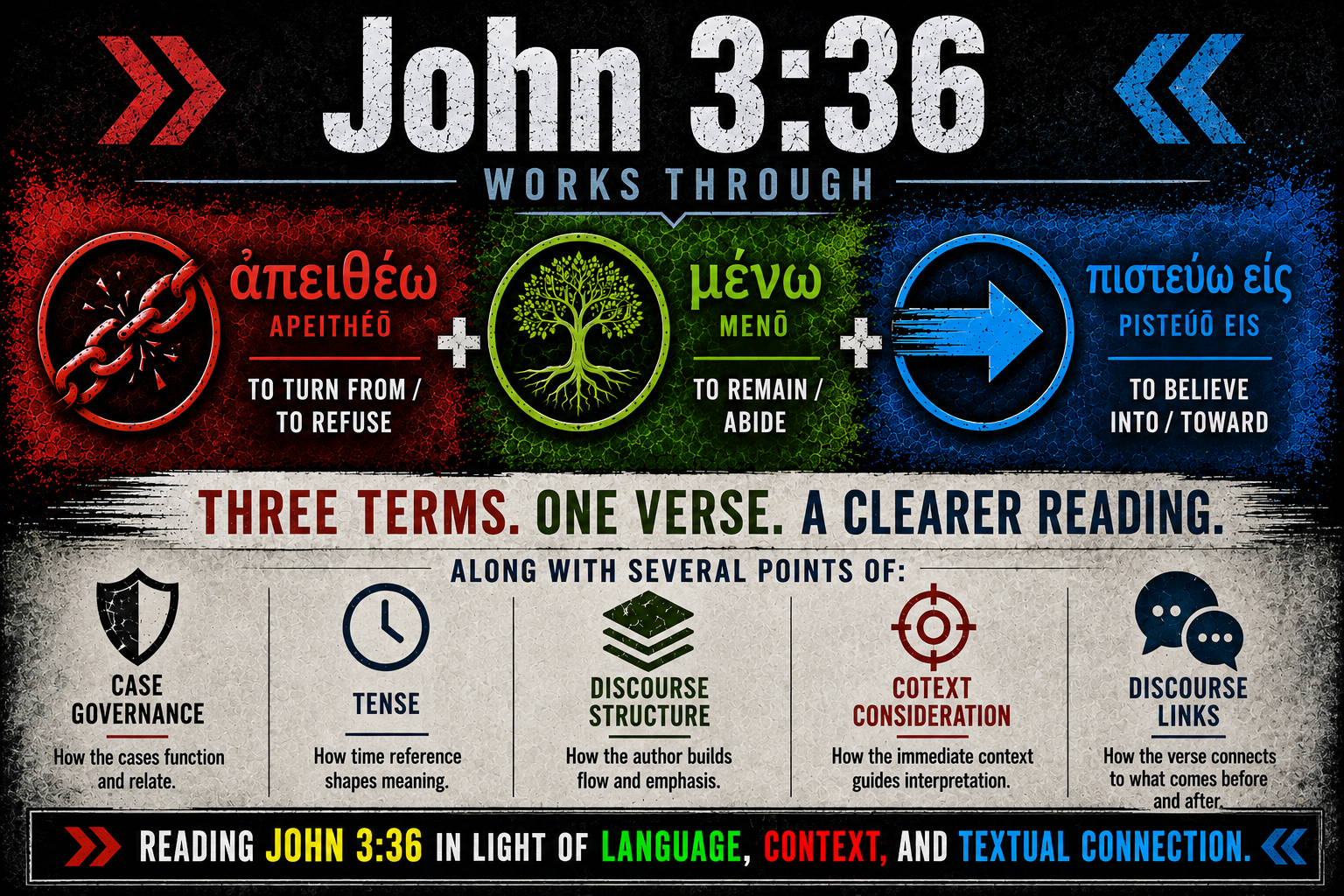
It's a small verse doing a great deal of work, and there are three Greek words underneath it worth pulling apart, because English flattens all three in ways that lose something real.
What God actually wants
Skip forward a few chapters to John 6, where a crowd who've just been fed by Jesus follow him and ask him directly what they need to do to be doing God's work.
It's a plural question, works, a checklist mentality, exactly the kind of religious accounting a serious first-century Jewish person would reach for.
Jesus's answer collapses the whole thing: "this is the work of God, that you believe in him whom he has sent" (6:29). The word 'work' is in the singular ... there's no great long list of things required to be done.
And in fact there's not even a singular task to be performed, but a trust to be placed in the one that God sent.
That's the assumption sitting underneath the first half of 3:36.
Eternal life was never the prize at the end of a long checklist ... but belongs, simply, to the one who trusts Christ.
Believe, or trust into
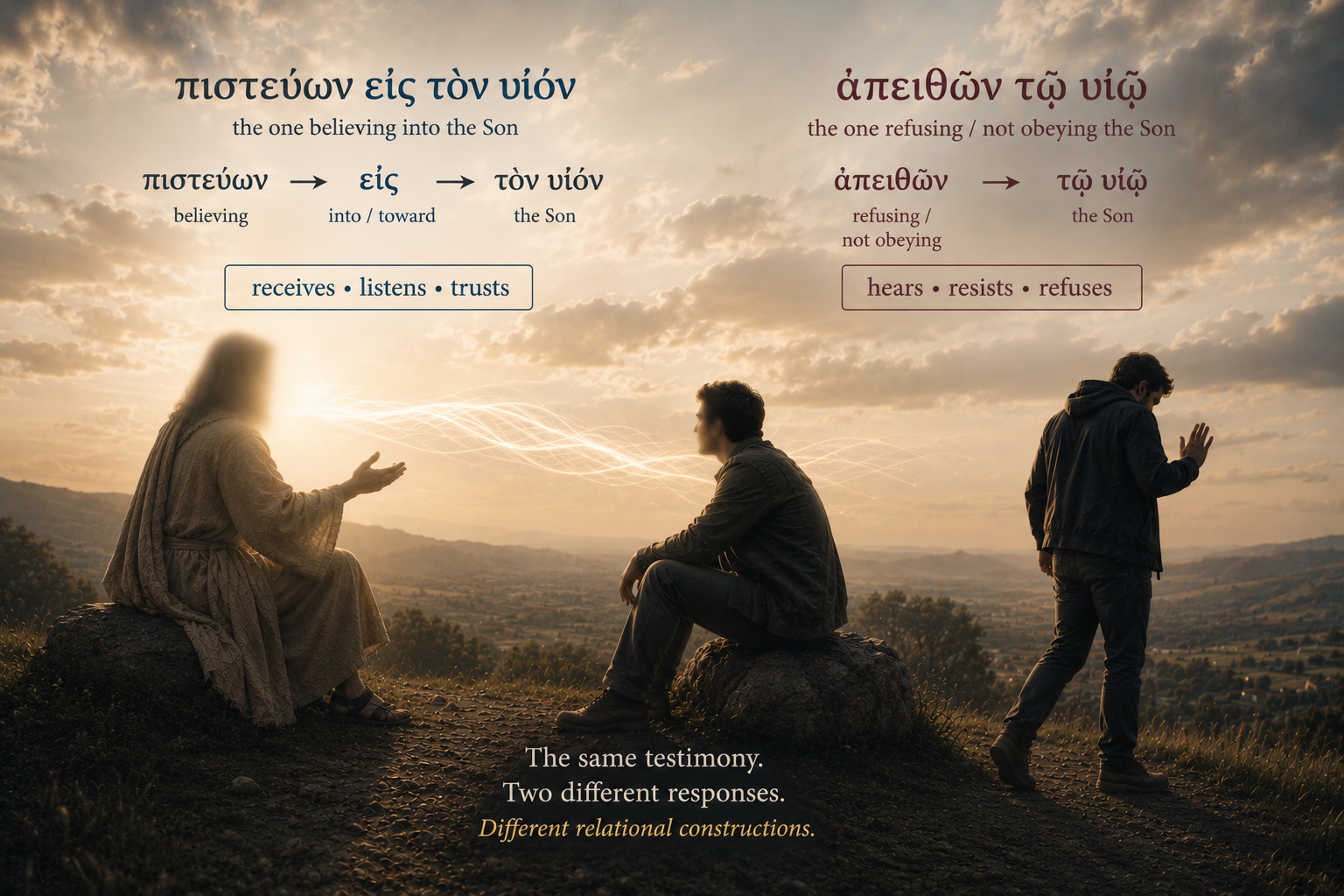
The Greek word usually translated "believe" here, pisteuō, carries more weight than the English word does on its own. John's most common construction isn't "believe that," believing a fact is true. It's pisteuō eis, literally "believe into," and eis is a word of movement, toward or into something.
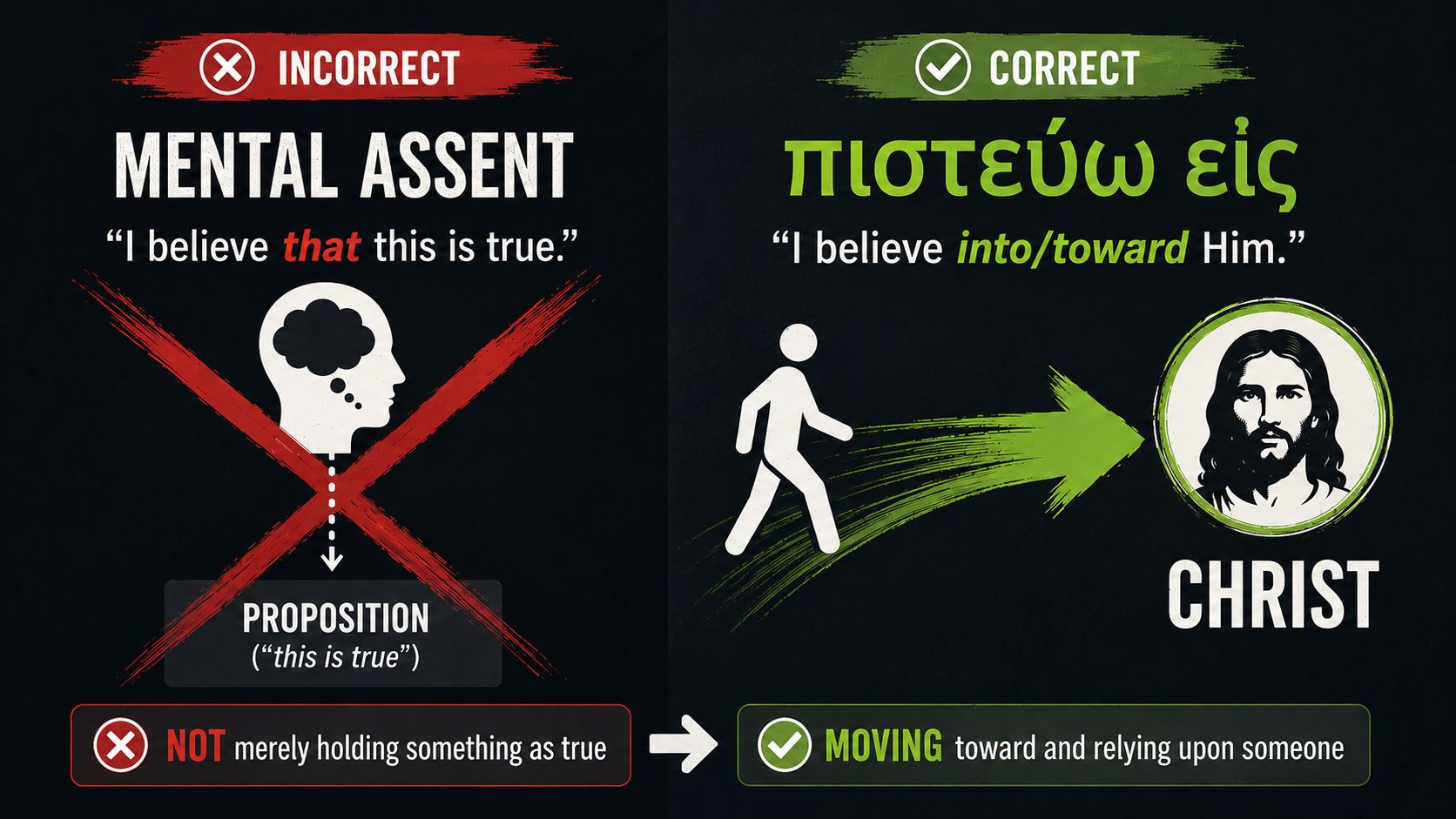
So when John says "whoever believes in the Son," he's not primarily describing a tick in an intellectual box. He's describing a movement toward a person, trust placed in someone, a whole self entrusted to him.
John gives us his own gloss on this a chapter earlier: "to all who received him, who believed in his name, he gave the right to become children of God" (1:12). Received him. Believed in his name. Set side by side, meaning the same thing. Believing, in John's hands, is receiving a person, not agreeing with a proposition.
Refuse, not just disobey
Which brings us to the word John chooses for the opposite response, in the second half of 3:36.
He had a simple option available, "not believing," and had already used it earlier in this very chapter (3:18).
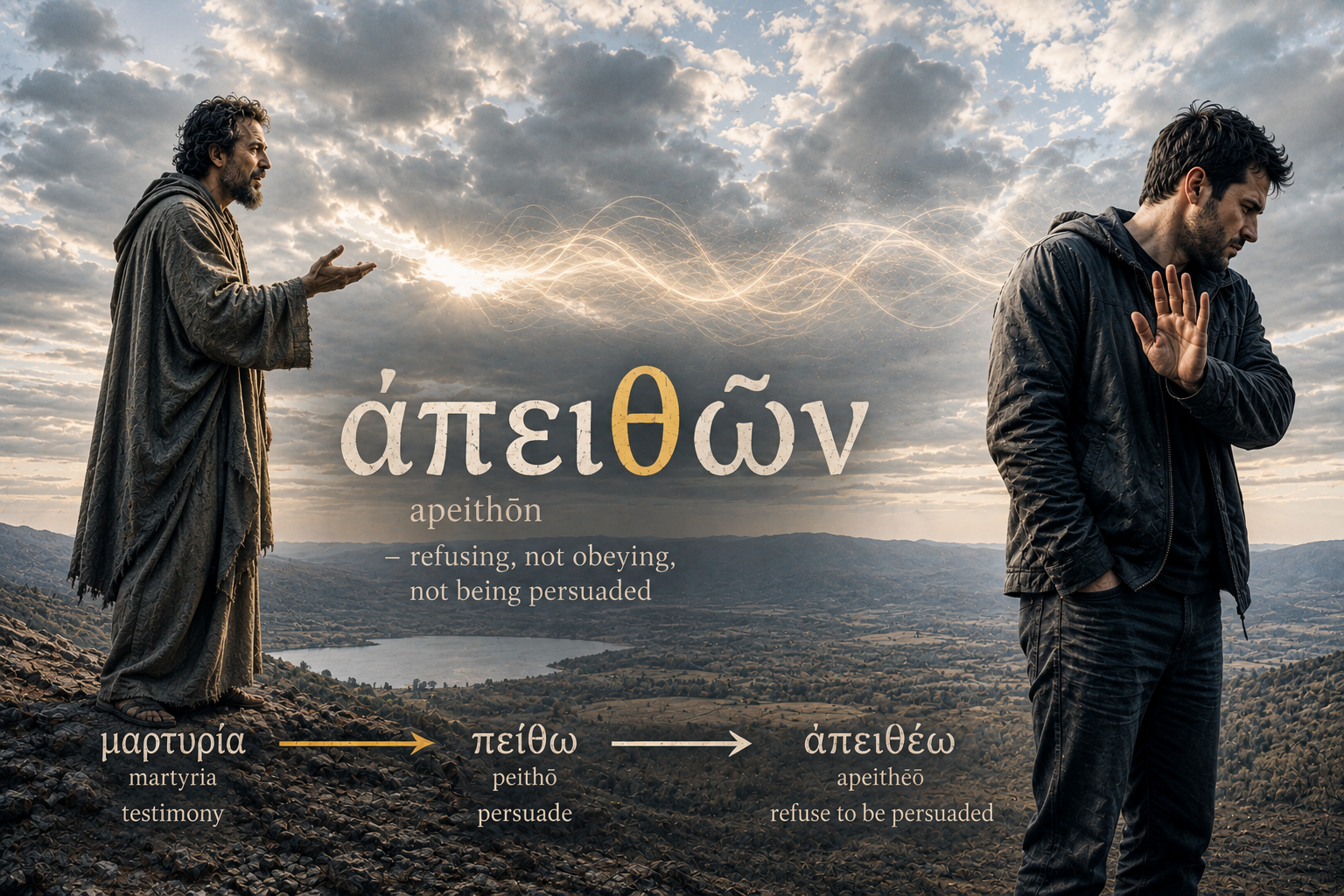
Instead, at the summary verse, he switches to a different word: apeitheō, usually translated "does not obey." It's built from a small negating prefix, the same pattern English still uses in words like atheist (without god) or amoral (without morality), attached to the verb peithō, "to persuade."
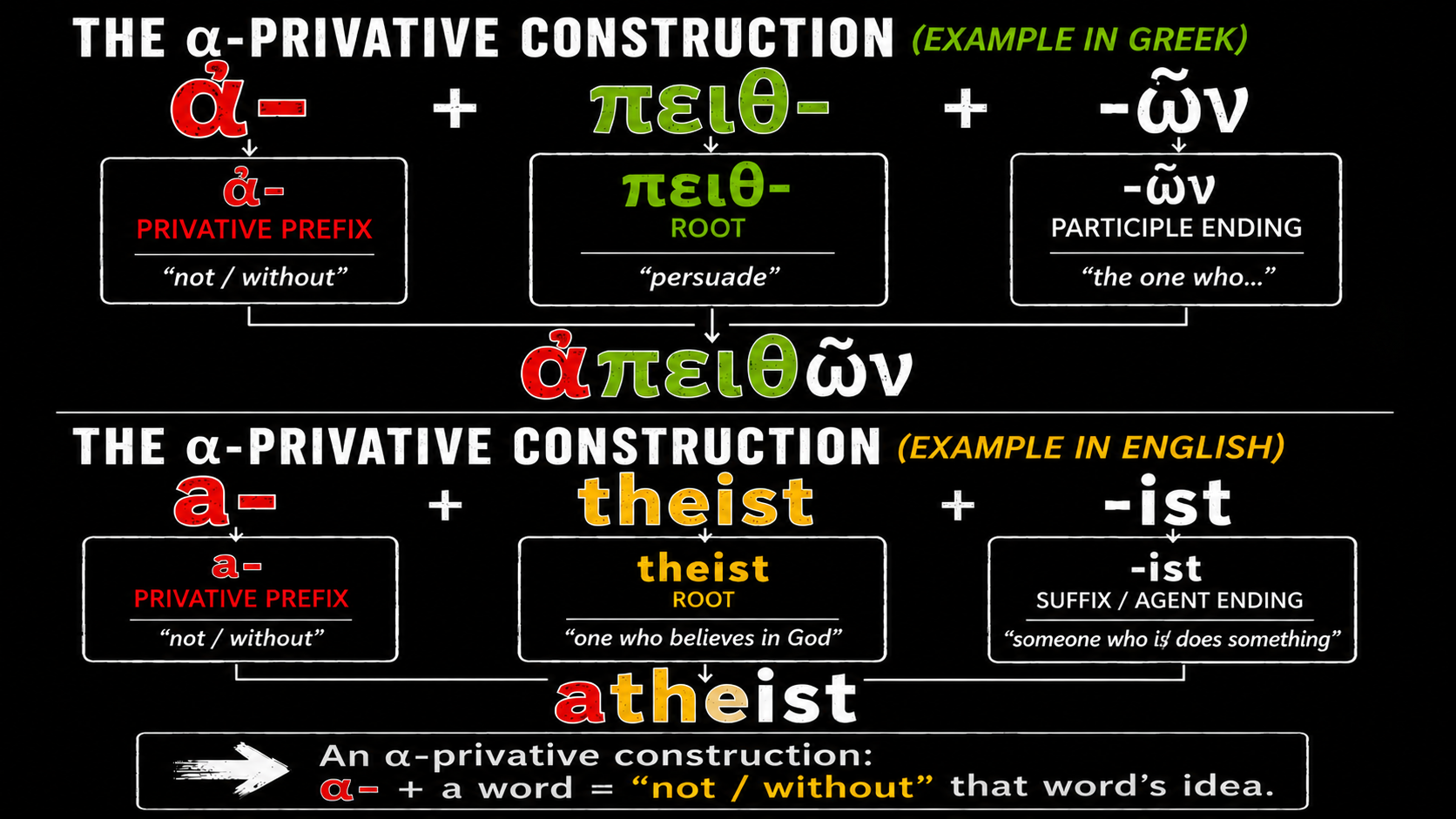
Put them together and you get, roughly, "to remain unpersuaded," and from there, to refuse, to resist, to disobey.
Given everything trust has just been shown to mean, believing as receiving, as moving toward, "refusing to obey" is really refusing testimony, refusing to be persuaded, refusing to let someone who has come with real authority actually change anything.
It's the mirror image of receiving him.
One moves toward the Son.
The other digs in against him.
What remains
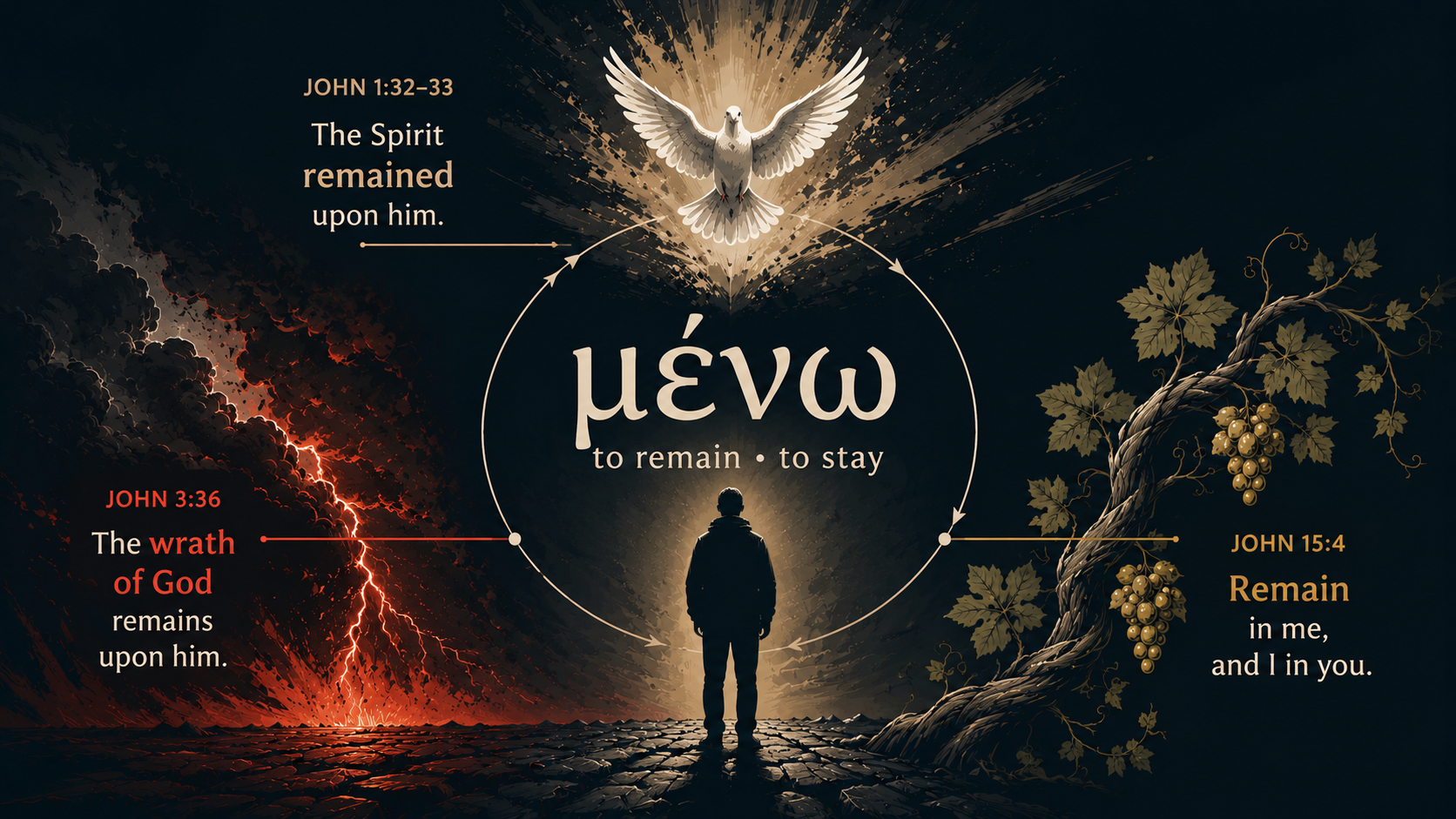
And then the verse doesn't stop there. It adds a third movement: "but the wrath of God remains on him." That verb, remains, is present tense, not future. It doesn't say wrath is coming for the person who refuses. It says wrath is already there, already the case, prior to anything else happening. Believing doesn't dodge a bullet fired later. It removes something already sitting in place.
That word for "remains," menō, turns out to be one of John's favourite words, and it doesn't only show up here.
Right at the start of the Gospel, it's the same word used for the Spirit coming down and remaining on Jesus at his baptism (1:32-33).
And much later, it becomes the whole picture of Christian life itself, in the vine and branches, "remain in me" (15:4), a life joined and fruitful rather than cut off and withering. Follow the thread and you get a striking pattern: what remains on the Son is the Spirit of God.
What remains on the one who refuses him is judgement, already in place. And what remains for the one who trusts is a whole life joined to the vine.
Nicodemus, afterward
We never see the moment Nicodemus stops refusing and starts believing. John doesn't give us the scene. But he doesn't vanish from the story either. In chapter 7, he's the lone voice among the Pharisees willing to say Jesus deserves a fair hearing, a small, careful, still hedged intervention, and it costs him something with his colleagues. And then, right at the end, after the crucifixion, he turns up one final time, alongside Joseph of Arimathea, carrying seventy-five pounds of myrrh and spices, an extravagant, public act, to bury a man everyone else thought was finished. No longer under cover of night.
Nobody tells us when the change happened. But the shape of it is unmistakable. The man who came in darkness with careful questions ends up spending a fortune, in daylight, on the body of a dead rabbi. Something moved.
That's really the question 3:36 leaves for the rest of us, and it's not primarily about information.
Most of us here already know the story, the way Nicodemus already knew his Torah. The question is whether it's ever been allowed to do to us what it eventually did to him.

Take Up Your Cross: What Mark 8:27-38 Says About Following Jesus as Messiah