"I Hope You Are Well": What a Royal Welsh Show Crowd Taught Me About 3 John 2

Every email seems to start the same way now:
"Dear so-and-so, I hope you are well."
We type it without thinking. It's become background noise, a courtesy we barely mean.
But that little phrase is older than any of us realise.
Right at the start of the shortest letter in the New Testament, a man known simply as "the Elder" writes to his friend Gaius and says almost exactly the same thing: "I pray that you may prosper and be in health, just as your soul is prospering" (3 John 2).
The book of Third John is easy to miss. It's one page of ancient letter, written near the end of the first century, most likely by John the Apostle or someone very close to him.
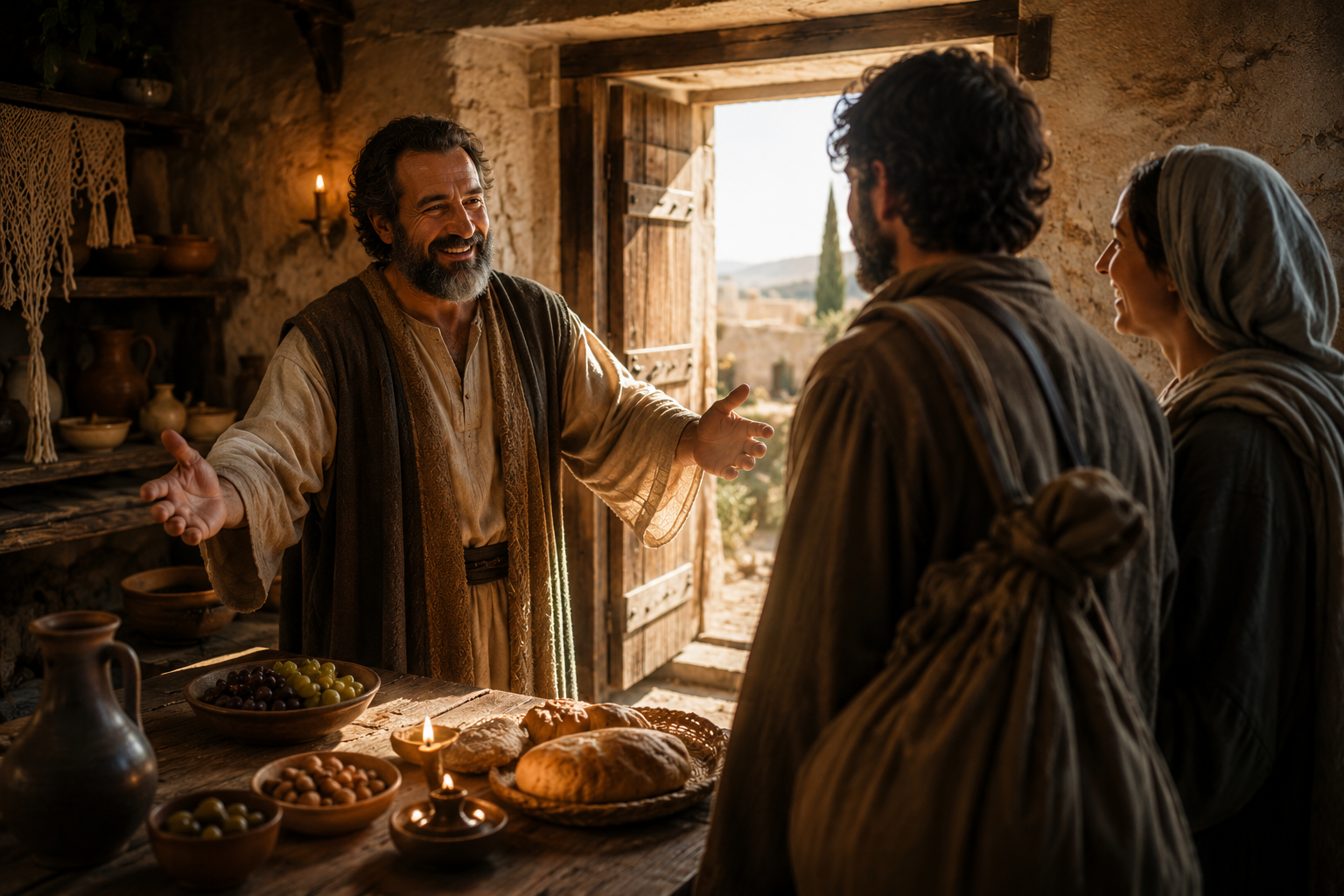
It commends a man called Gaius for his generous hospitality to travelling gospel workers, and warns him about a difficult character called Diotrephes who was throwing people out of the church.
Not much drama, on the face of it. But that opening greeting carries more cargo than at first appears.
Look closely at what John the Elder actually says.
He wishes for Gaius's body to prosper and be healthy, that part is a hope, something not yet certain.
But when he speaks about Gaius's soul, he doesn't hope, he states it as plain fact: it is prospering, already, visibly, because people have told him so.
The soul's condition comes first, and it's realised already.
There's a warning folded into that blessing too, once you see who else appears in this letter. Later on, the Elder mentions a man called Diotrephes, described as someone who "loves to be first" (v. 9). Not a doctrinal error, an appetite. A hunger for status that he's never learned to say no to. And look what it produces: he refuses to welcome the Elder's people, and he throws out of the church anyone who does welcome them (v. 10). One unchecked appetite doesn't stay small. It reorganises everything around itself.
The New Testament has a word for the opposite of this: ἐγκράτεια, self-control, self-mastery, the capacity to say no to yourself. Paul lists it as fruit of the Spirit (Galatians 5:23) and names it as something the church should look for in its leaders (Titus 1:8, 2 Peter 1:6). Its absence isn't a small character flaw. Paul warns of people whose "god is their belly" (Philippians 3:19), ruled entirely by whatever appetite has gone unchecked, whether that's food, comfort, status or being first.
Gaius is the opposite of Diotrephes in exactly this respect. He isn't commended for doctrine. He's commended for hospitality, opening his home and funding total strangers on their way (vv. 5-6), a costly, outward, self-denying habit. Where Diotrephes's appetite closed doors, Gaius's self-governance opened them. Read against that contrast, the Elder's blessing to Gaius sounds almost like a quiet warning too: keep prospering, don't let it stop, don't become Diotrephes.
That's not the Bible saying bodies don't matter, quite the opposite.
It's saying something wiser: what's true on the inside of a person tends to show itself on the outside.
A soul that's genuinely well tends, over time, to produce a life that's cared for ... body included.
Gaius's inward health showed up outwardly, in his generosity, his hospitality, his willingness to open his home to strangers doing gospel work.
The body's wellbeing is being prayed for ... as if it isn't great at this point ... and that sits in contrast to the man's (much healthier) soul.
Which made all me think ...
So I found myself thinking about this verse walking round the Royal Welsh Show this year.
Away from the stock rings and produce tents, which are full of people who certainly ought to understand real food, I watched a very different Wales walk past.

So many people, young people especially, struggling in the heat, unsteady on their feet, visibly carrying the weight of years spent indoors and years of eating whatever's cheapest and quickest ... and it seems to be making them slow and unstable.
This isn't me pointing fingers.
Of course there are people who get physically unfit and inhibited by other health factors and sometimes by the medication they take for other things.
But the picture is so general it makes me question, with real concern, what's happened to us as a nation, and whether the answer is as much spiritual as it is physical.
The statistics back up what I observed with my own eyes looking at the shuffling masses at the show .
Doctors are now warning that ultra-processed food is driving obesity right across the country, in children as much as adults, and that the crisis has sharpened noticeably since the pandemic.
None of that is any single person's fault. But it is a picture of a people who have lost the old, God-given connection between food, land, work and body, the very connection that a field full of Welsh farmers should understand better than almost anyone else in Britain. But ... please take careful note too of that 'should'.
The bottom line is that Scripture refers to the soul and the body as distinct aspects of human personality, but it never separates the soul from body. Biblically, human personality comprises a soul-body unity ... a 'pschosmatic unity', in the jargon.
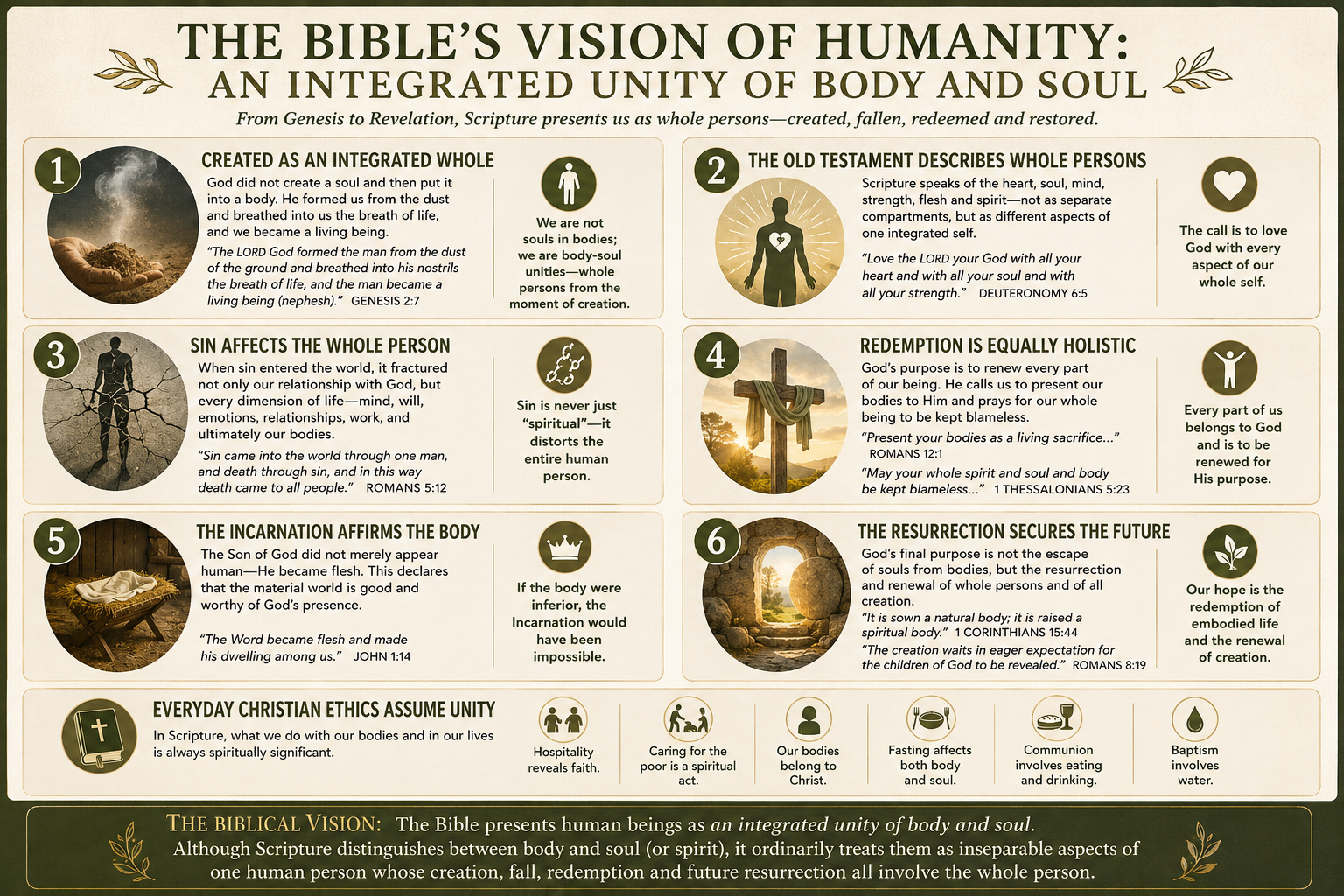
- God puts the first humans in a garden and tells them to work it, not to be waited on by it.
- The Psalms praise God for growing grass for the cattle and plants for people to cultivate, food is always tied to labour.
- Paul tells the Corinthians their body is a temple, worth honouring, not neglecting and not worshipping either.
- And right there in 3 John 2, tucked inside an ordinary greeting, is the same principle: soul and body were meant to prosper together.
Diotrephes never repented of gluttony or drunkenness.
His sin was subtler and more dangerous: he never learned to say no to himself.
An appetite for being first, fed and never refused, grew until it could throw people out of the church who got in its way.
The Elder's blessing to Gaius, prosper in body as your soul is already prospering, is also, quietly, a warning. A soul left unchecked doesn't stay still. It either grows in self-giving, like Gaius's, or it grows in appetite, like Diotrephes's.
So next time you type "I hope you are well," or read it in an email from someone else, let it be more than habit.
Ask yourself the question the Elder was really asking Gaius.
Is what's true of your soul becoming true of the rest of your life too, including what you have, or haven't, learned to refuse?

Free access to the whole of Mark's Gospel in text and audio is avaliable here: live.bible.is/bible/ENGNLH/MRK/1
Free of charge, with no sign-up required.

The Man Who Ran Up and Walked Away: Mark 10:17-31