Who Then Is This? Reflections on Mark 4:35-41
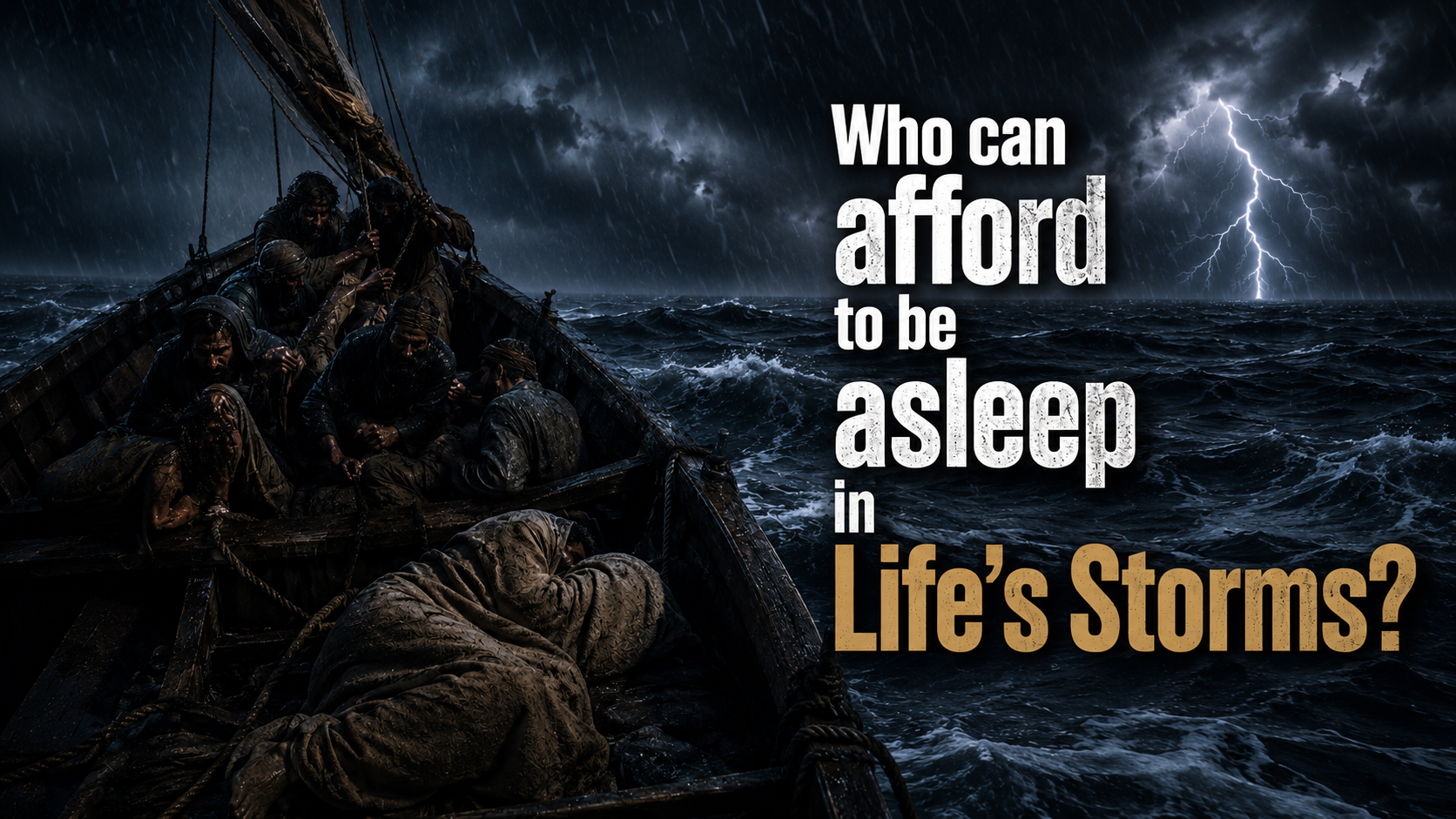
Who Then Is This? Reflections on Mark 4:35-41
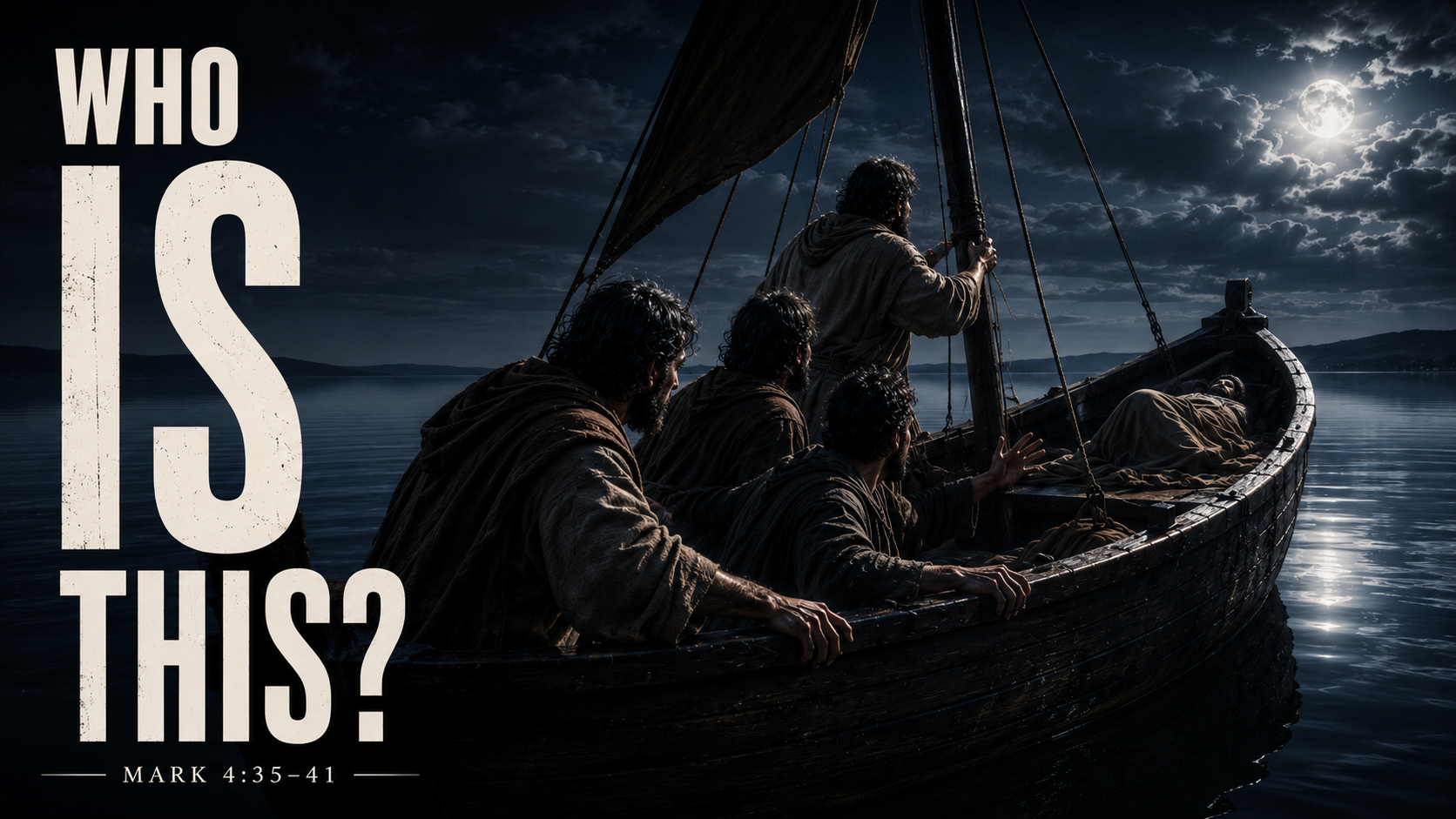
There's a moment near the end of this story worth holding onto before we even start, because it's the moment the whole passage is built around. The storm has stopped. The boat that was filling with water thirty seconds earlier is now rocking gently on water like glass. And instead of relief, instead of laughter, the disciples turn to each other and ask a question: "Who then is this, that even the wind and the sea obey him?"
That question is where Mark wants us to end up too.
We know this story well, many of us may have heard it in Ysgol Sul - Sunday school.
But it's worth remembering what's actually going on physically before we get to the theology.
The Sea of Galilee sits in a deep rift valley, roughly two hundred metres below sea level, with the Golan plateau rising steeply on the eastern side to well over a thousand metres.
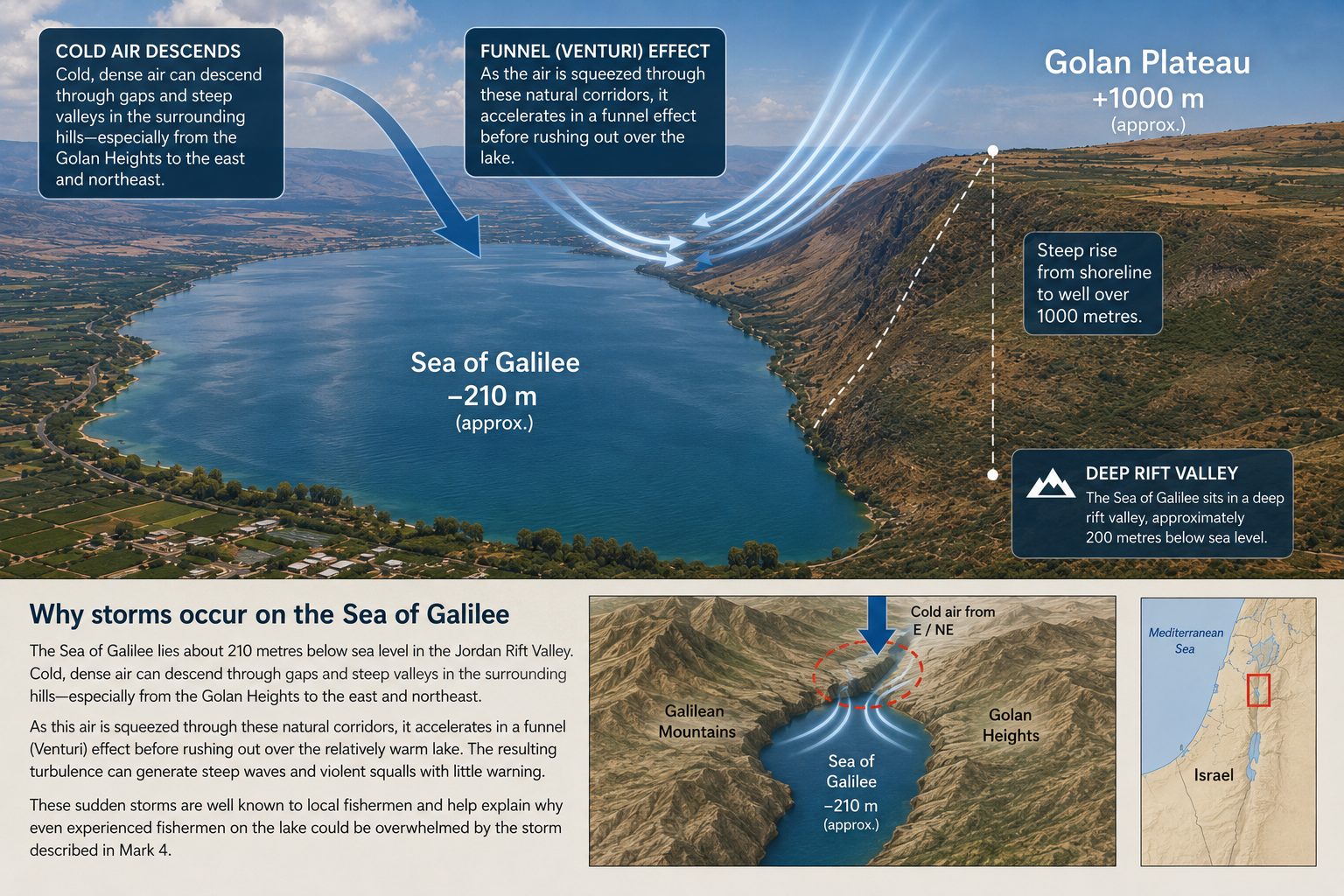
That combination, low basin and high ground close by, produces sudden, violent squalls with very little warning. Modern meteorological study has confirmed what every first-century Galilean fisherman already knew: this lake produces storms disproportionately violent for its size. And several of the men in that boat were professional fishermen, not nervous landlubbers. When men who had worked that lake all their lives are afraid, we're entitled to take the danger seriously.
The boat itself is worth picturing too.
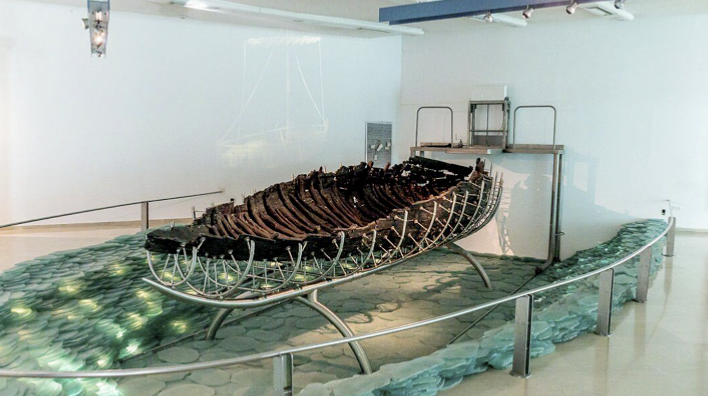
In 1986 a first-century fishing boat was found preserved in mud on the north-western shore of the Sea of Galilee, now conserved at Kibbutz Ginosar. About eight metres long, open decked, shallow draft, a working boat, but not built for heavy weather. Low sides, genuinely vulnerable in a serious squall. When Mark tells us the waves were breaking in and the boat was already filling, that's not dramatic colour. Archaeology tells us that's a vessel in real danger of sinking.
There's one more piece of background that matters more than the geography, though, and it's this: in the Jewish imagination, the sea was never just water. It was the domain of primordial chaos.
Genesis 1 has God's Spirit hovering over "the deep," tehom, and creation itself is pictured as an act of pushing that chaos back.
Psalm 89 says of God, "you rule the raging of the sea; when its waves rise, you still them."
Psalm 107 describes sailors crying out to the Lord in a storm and the Lord stilling it.
Job 38 has God speaking from the whirlwind: "who shut in the sea with doors... thus far shall you come and no further."
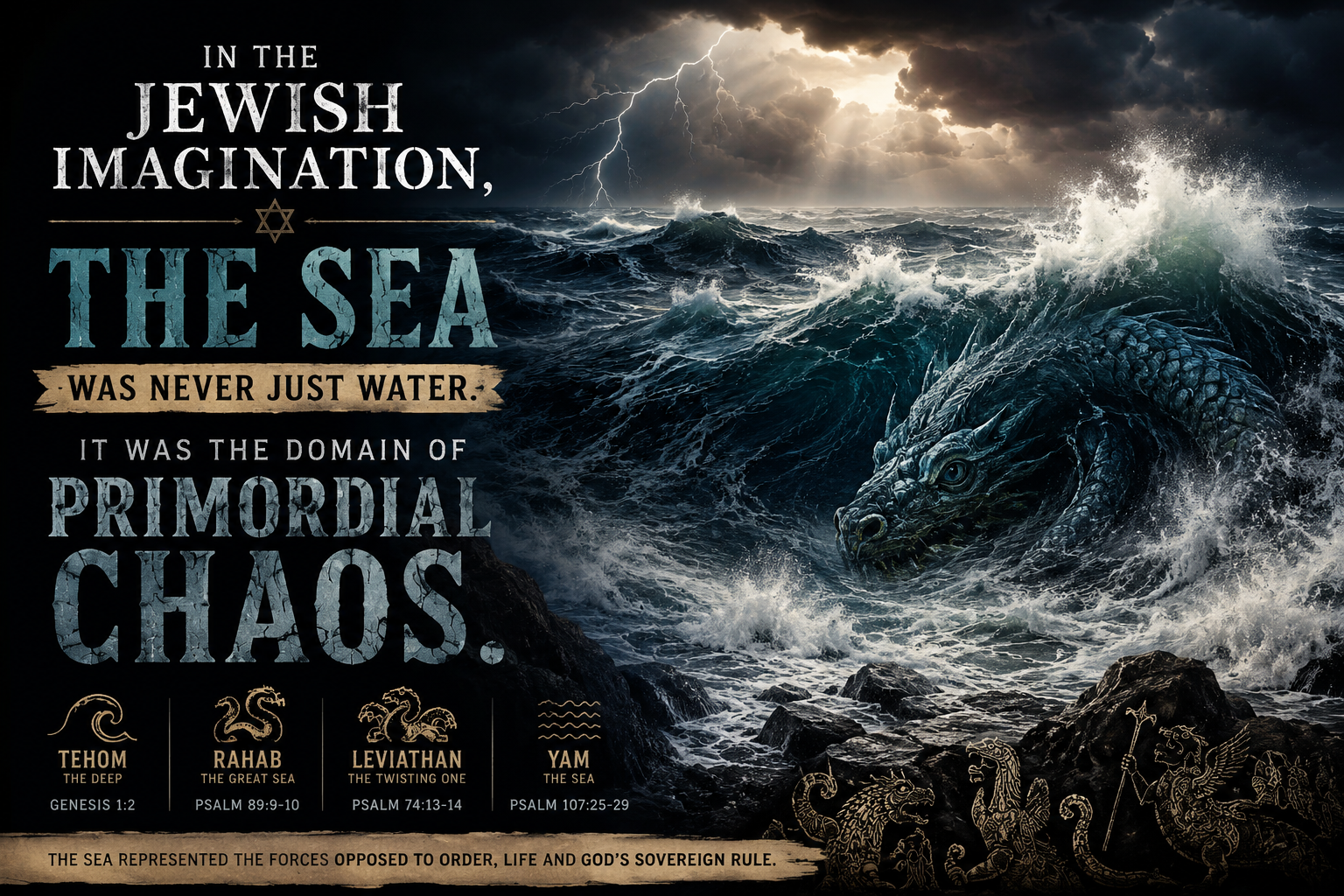
The consistent theological claim running through all of that is simple: the ability to command and silence the sea is not meteorological competence.
It's a divine prerogative.
It belongs to Yahweh alone.
Hold onto that idea, because we'll need it shortly.
So ... into the text.
Verse 35 opens with a construction that anchors the whole event to the teaching day we've just come from, the day of the parable of the sower and the rest of chapter 4. Jesus, using the historic present tense Mark favours throughout his gospel, says, "let us go across to the other side."
Verse 36 gives us a small, almost throwaway detail: "they took him, just as he was," and "other boats were with him." That second detail has no theological weight at all, which is exactly why it rings true. It's the kind of thing an eyewitness remembers, almost certainly Peter, telling Mark years later.
Then the crisis.
Mark's Greek for the storm in verse 37 is a specific word, not a generic term for bad weather, the same word that turns up in the Greek Old Testament at Job 38:1, right where God speaks from the whirlwind.
The waves keep breaking in.
The boat is already filling.
And in the middle of all that, verse 38 gives us the compositional masterstroke of the whole passage: Jesus is in the stern, asleep, on the cushion.
That word for "cushion" appears nowhere else in the entire New Testament. Scholars have wondered whether it refers to a ballast bag kept in the stern rather than a soft pillow, and either way, the specificity of the detail speaks to genuine memory. He was exhausted enough to sleep through a storm that was terrifying professional fishermen.
And how do they wake him?
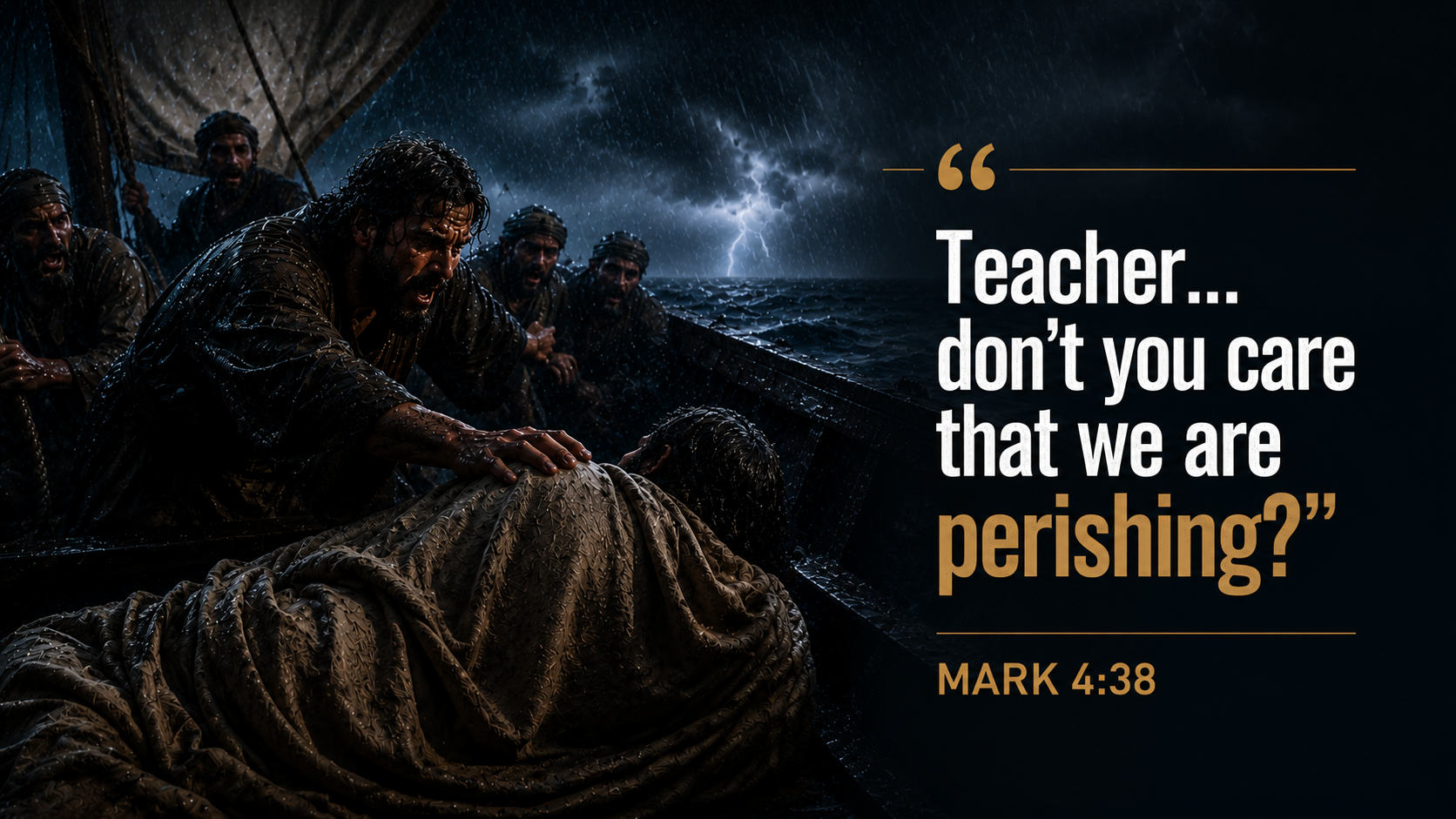
"Teacher," they say, "do you not care that we are perishing?"
Not "Lord."
Not "Rabbi." A public teaching title.
Their grasp of who's actually in the boat with them hasn't caught up with the moment yet, and if we're honest, most of us know what that feels like.
Verse 39 is the theological centre of the whole passage.
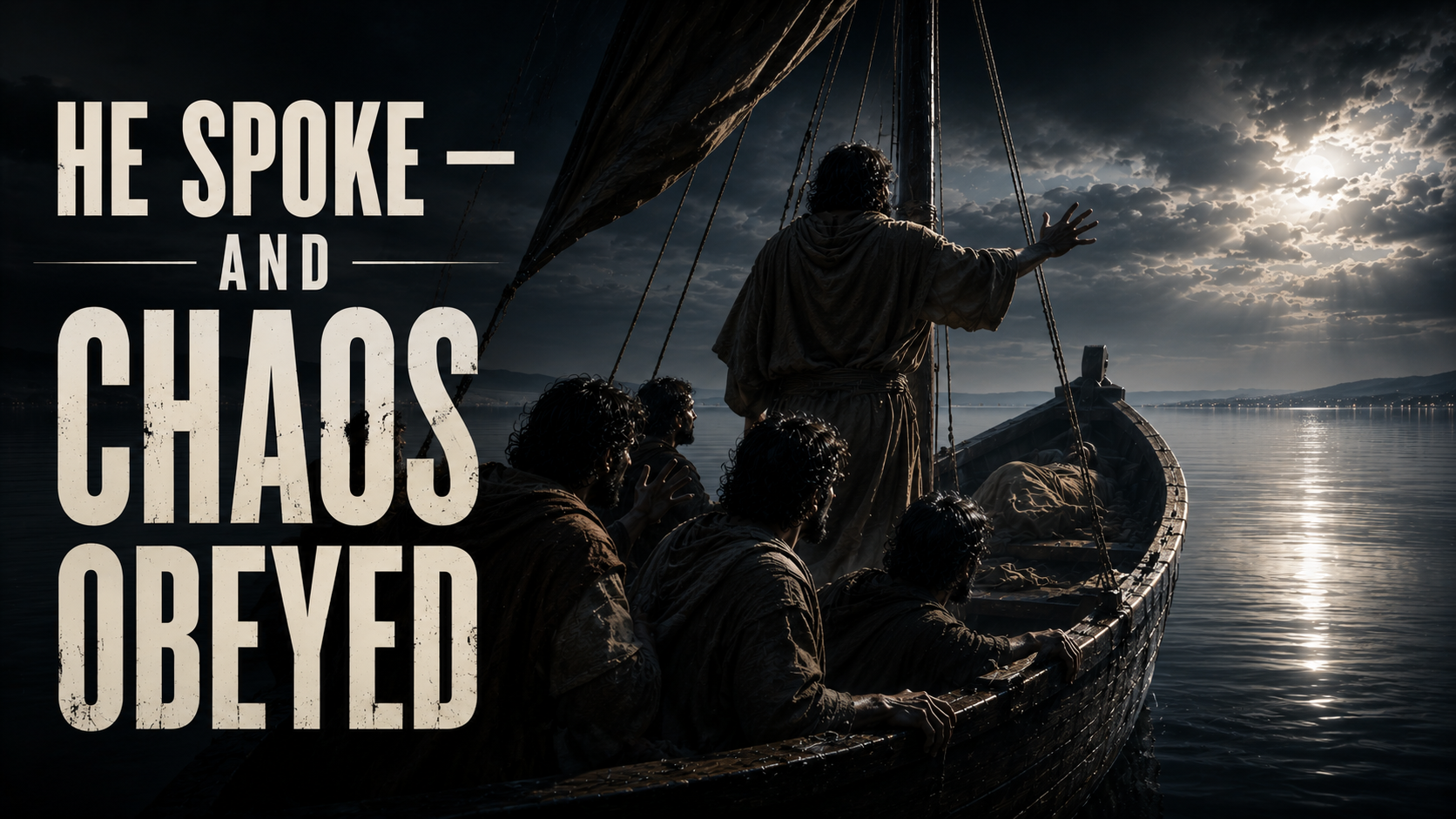
"He awoke and rebuked the wind, and said to the sea, peace, be still."
That verb, "rebuked," is the same one Mark uses when Jesus silences demonic powers elsewhere in his gospel. We don't need to decide whether the storm itself is demonic to notice that Jesus addresses it the way he addresses a personal opponent, which, heading as they are into Gentile, demon-associated territory on the other side, makes a certain sense.
The Greek behind "be still" is stronger than our English suggests: be muzzled, and stay muzzled. And the result, "the wind ceased, and there was a great calm," deliberately balances the "great storm" of verse 37.
The greatness of the storm is matched and overwhelmed by the greatness of the calm. Not a gradual easing. An immediate, total transformation.
Then two questions from Jesus: "why are you so afraid? Have you still no faith?" The word for "afraid" here isn't the ordinary Greek word for fear. It carries a sense of cowardice, a shameful failure of nerve. And the second question isn't simply "do you not have faith," but "do you not yet have faith," a challenge calibrated precisely to their history with him. After all they'd seen, faith should already be there.
And then verse 41: "they were filled with great fear, and said to one another, who then is this, that even the wind and the sea obey him?"
This is a different fear from verse 40. That was cowardice in the face of the storm. This is awe, the overwhelming quality of a genuine encounter with the divine. The Greek word behind "obey" combines the ideas of hearing and placing yourself under something, the language used for children obeying parents or servants obeying masters. Wind and sea are treated here as agents who heard their master's voice and complied.
It's worth noticing, too, the deliberate echo of Jonah: a man asleep in a boat during a violent storm, terrified sailors, a cry for help, a sudden calm.
The parallels are unmistakable, and so is the difference. In Jonah, the calm comes when the human being is removed, thrown overboard. In Mark, the calm comes when Jesus speaks. Jonah's presence in the boat is the problem. Jesus's presence in the boat is the solution.
There's a pastoral observation underneath all of this that I don't want us to miss. Jesus stills the storm before he corrects the disciples.
The physical danger is resolved first.
The challenge about their faith comes second, and it comes from the other side of rescue, not before it.
That ordering isn't incidental. It's a statement about the character of the one who commands the sea. He secures his people before he corrects them.
So what does this mean for those of us who've been walking with Christ a while?
A few things.
First, the primary crisis in this story was never the storm.
It was the question of who was in the boat with them.
The disciples already had the answer in their midst; they just didn't know it yet.
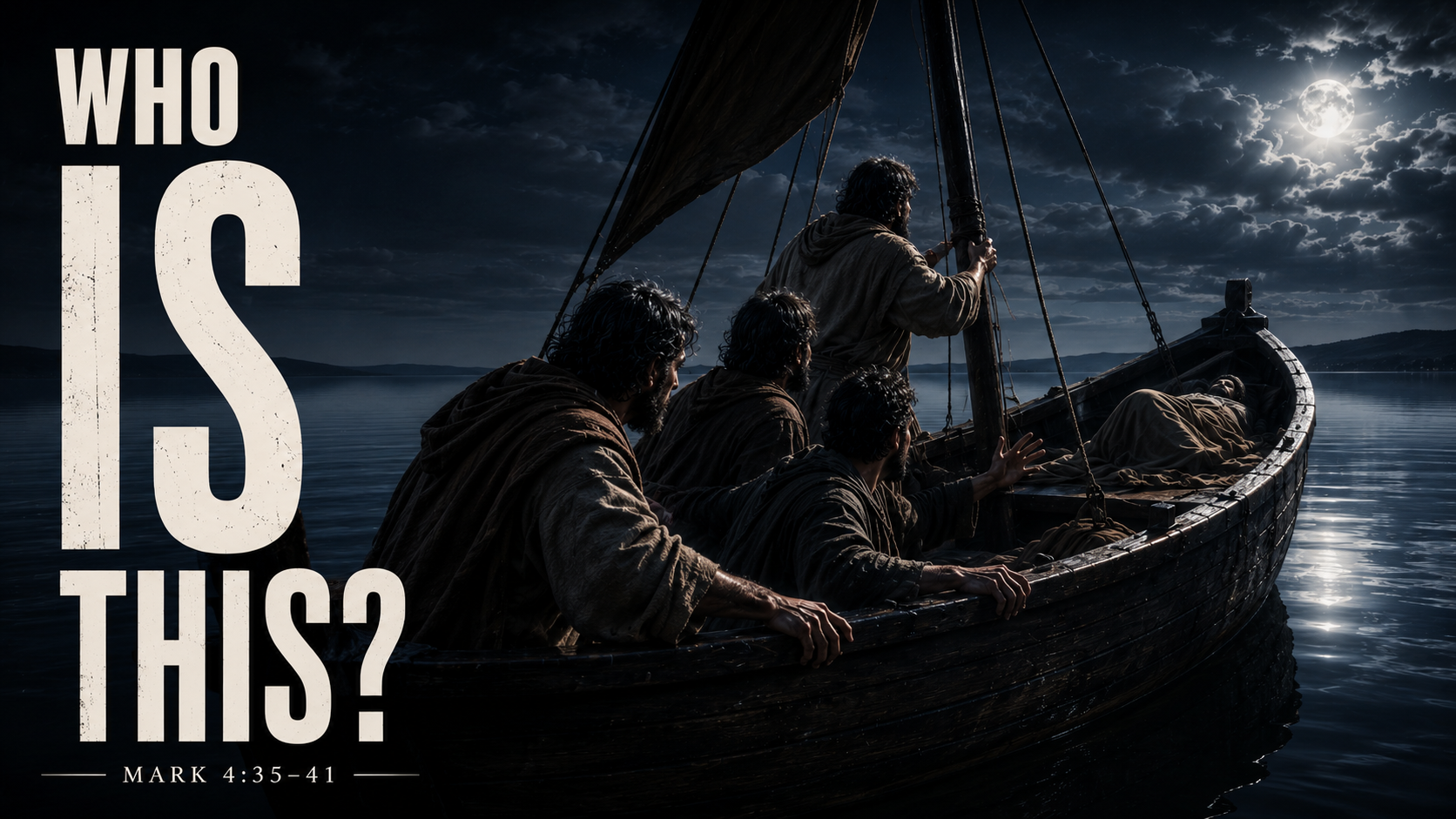
This passage is an invitation to reckon seriously, once again, with who Jesus actually is.
Second, the silence of God is not the indifference of God.
The disciples' accusing question, "do you not care that we are perishing?", facing that honestly is not the end of faith, it's the beginning of it.
Jesus doesn't answer with words. He answers by acting.
There are seasons in our lives when God's silence feels exactly like indifference, when the storm continues and the one who could stop it seems to be asleep in the back of the boat. Mark's answer to that feeling isn't a better argument. It's a redirection toward who Jesus is.
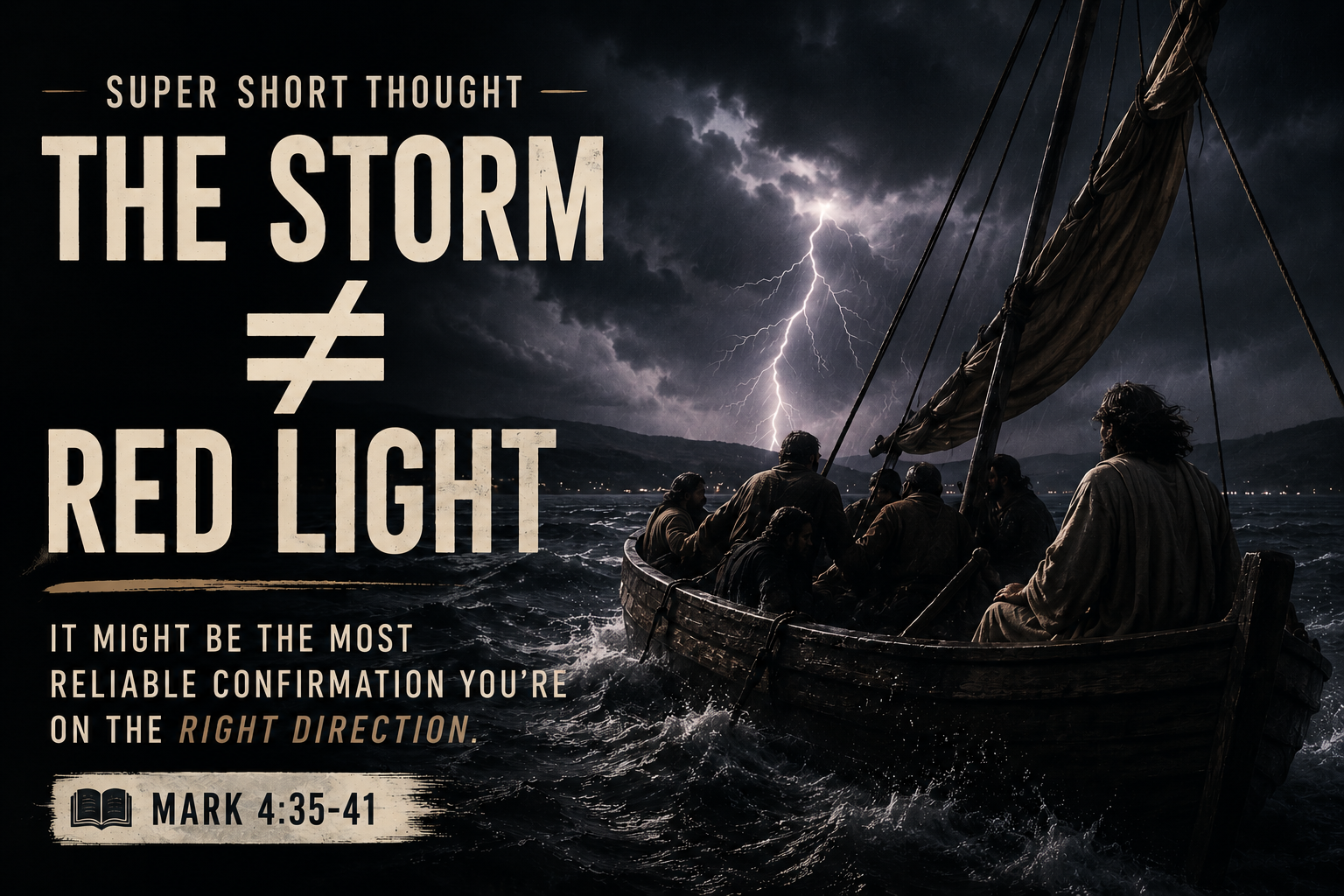
Third, and this might be the most useful thing for those of us who've been at this a long time: the storm does not mean you got in the wrong boat.
Jesus said "let's go across."
The storm hit them in obedience to that instruction, on the way to one of the most dramatic encounters in the whole gospel, the Gerasene demoniac on the other side.
The discomfort of following Christ's call, including its storms, is not evidence you've missed his direction.
It may be the most reliable evidence that you're exactly where he told you to go.
And finally, notice what happens to the fear itself across this passage.
It starts as fear of the circumstances and ends as awe of the God who can deal with them so decisively.
That's the pattern Mark wants for us too.
Not the elimination of fear, but its reorientation. When we genuinely reckon with who Jesus is, the things that dominated our emotional landscape start to look different in his presence.
Mark leaves the question of chapter 4 unanswered on purpose.
"Who then is this?" hangs in the air over the boat, because Mark intends his whole gospel to be the answer.
It's only in chapter 15, when a Roman centurion looks at a dead man on a cross and says, "truly this man was the Son of God," that Mark gives his answer in full.
The journey from the disciples' bewildered question in the boat to the centurion's confession at Calvary is the journey Mark is inviting every one of us to make.
If you're still somewhere on that journey, still working out who this Jesus is, you're in good company.
The disciples asked it first.
Mark wrote a gospel to help you answer it.
And there's a free copy of Mark's Gospel waiting for you if you want to keep going: https://live.bible.is/bible/ENGNLH/MRK/1

Rock, Empire and the Question That Changed Everything - Mark 8:27-38