What Happened in Capernaum | Word for the Week on Mark 1:21–28
Mark writes the way a good news editor would want you to write. Tight. Urgent. No wasted sentences. He barely stops for breath.
His opening sentence in the original Greek is 16 words: "The beginning of the gospel about Jesus Christ, the Son of God." No birth narrative, no genealogy, no poetic prologue. Just: here it is, here's who this is about, keep reading.
And that word he uses for good news, euangelion, is worth a moment's attention. In the first century it wasn't a religious word at all. It belonged to the Roman Empire. When the emperor won a military victory, when an heir to the throne was born, heralds were dispatched across the empire to proclaim the euangelion, the emperor's good news. The word was the property of power. It belonged to Caesar.
Mark takes it and gives it to a Galilean carpenter. That transfer of ownership is what the rest of his eight chapters is about.
The first place Mark takes us to demonstrate what that means is a synagogue in Capernaum, a working town on the northwest shore of the Sea of Galilee, about 250 kilometres north of Jerusalem.
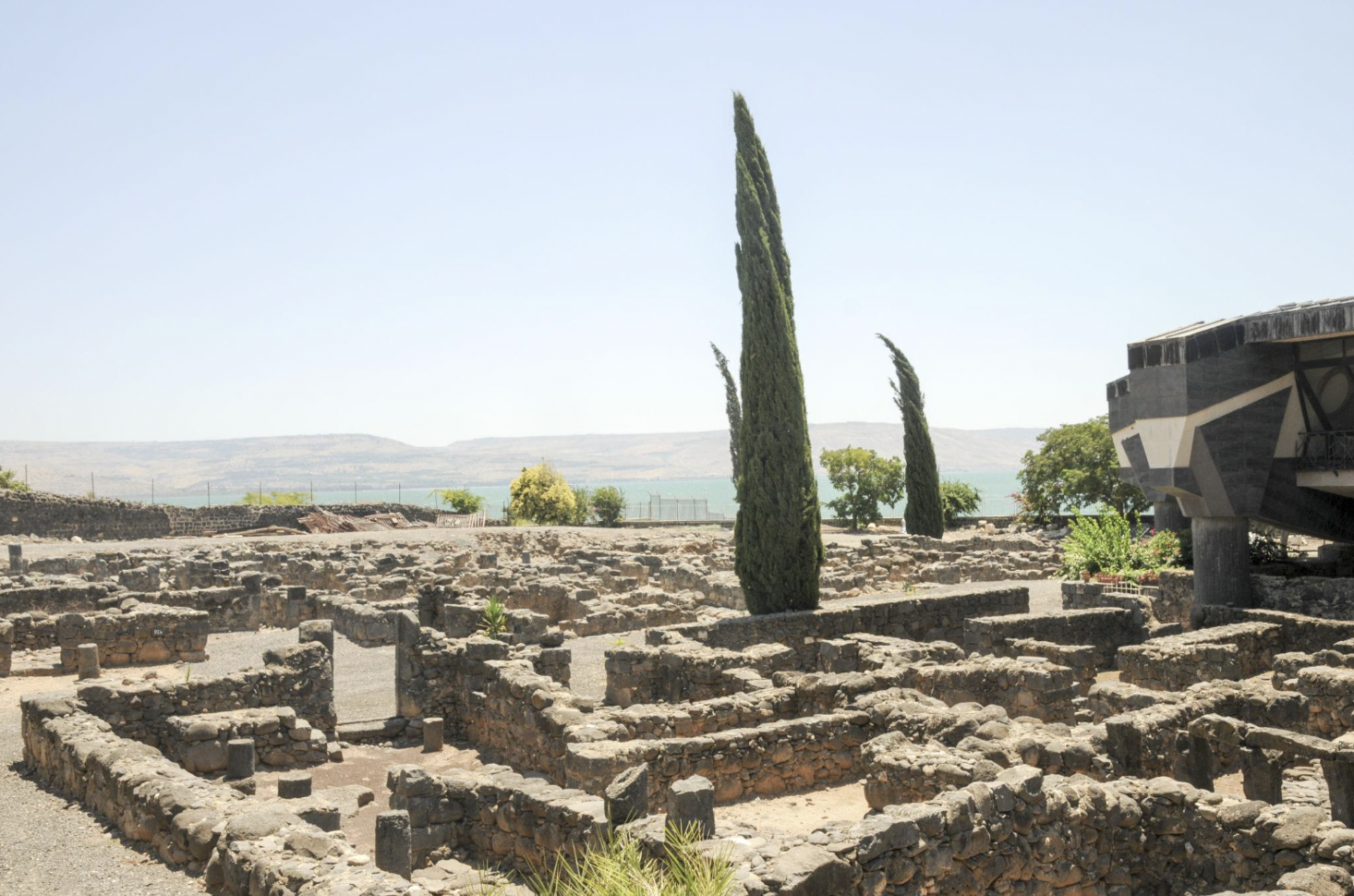
Fishing, some trade, a customs post. Not glamorous. Not important. The kind of place the Jerusalem establishment could barely have found on the map.
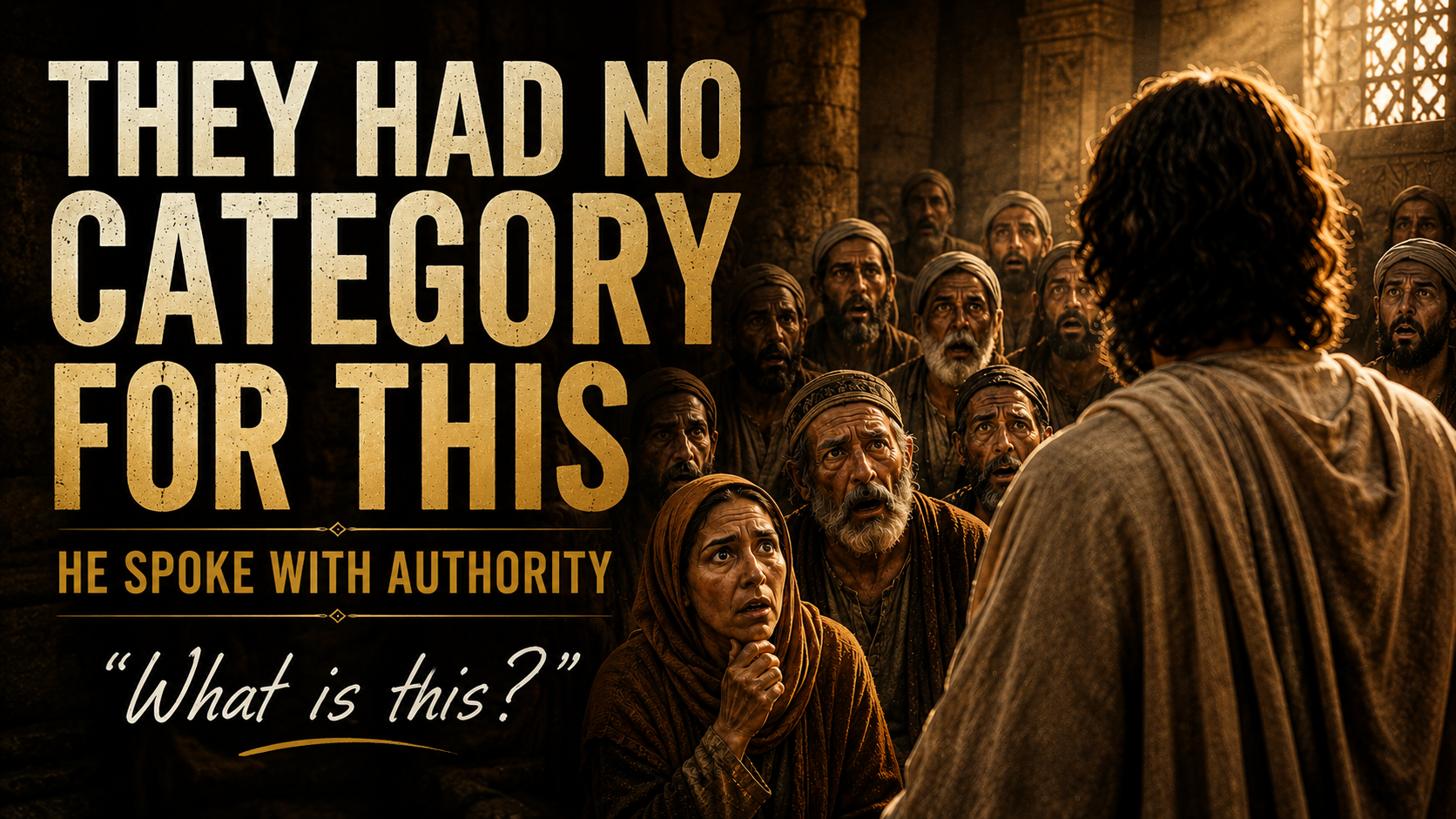
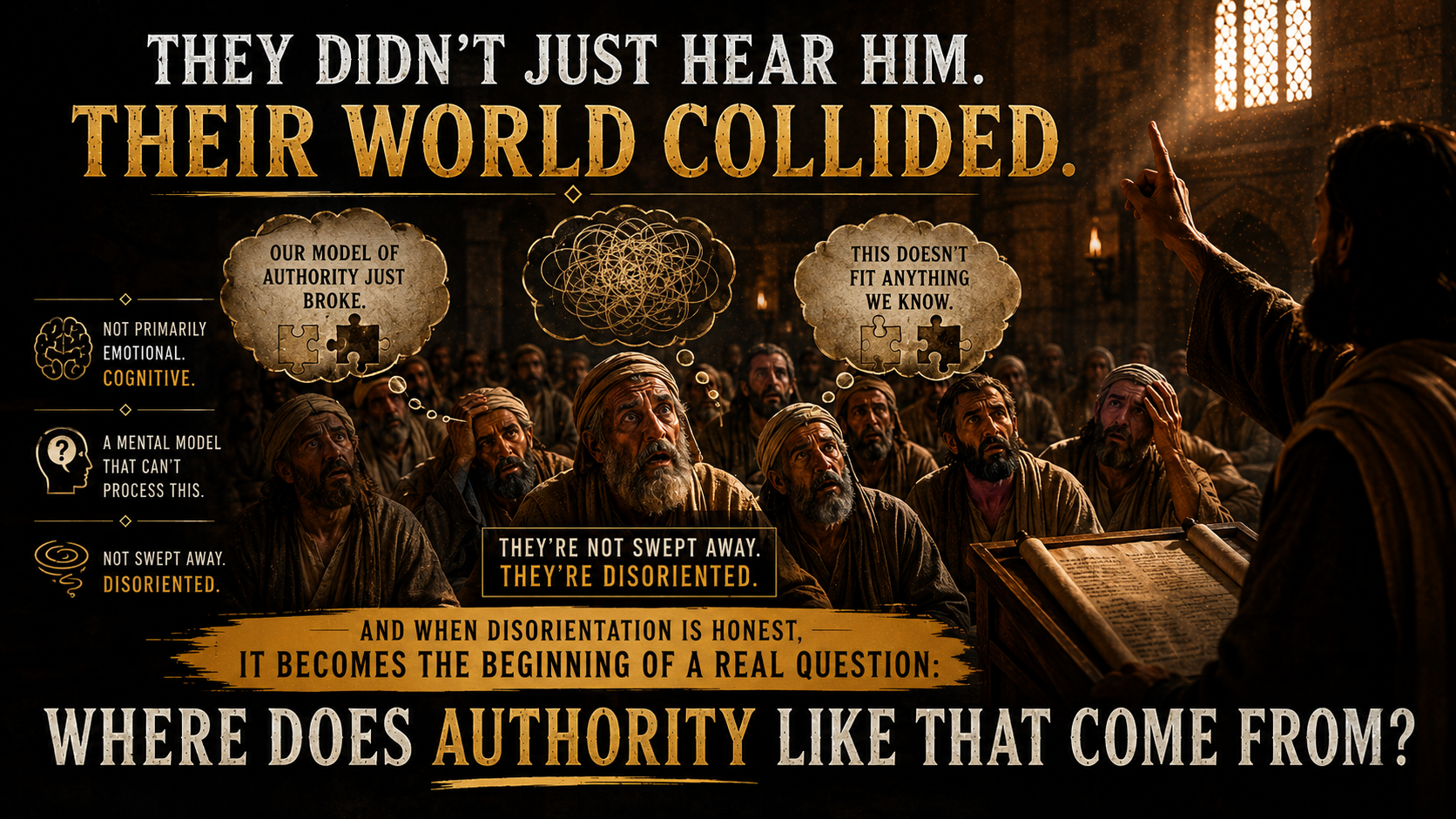
It's the Sabbath. Jesus walks in and sits down to teach. That was the custom; teachers sat to teach in the synagogue context. And something is immediately, obviously, disconcertingly different. Mark says the congregation was astonished, and the Greek word he uses is exeplasso: literally struck out of themselves. Your mental categories have just had a collision with something they can't process.
What caused it?
Mark is straightforward: "He was teaching them as one having authority, and not as the scribes." The scribes, the religious teachers of the day, taught by citation. Rabbi Hillel said this. Rabbi Shamai said that. The tradition going back to Moses teaches. Authority was always borrowed; you stood on someone else's shoulders and pointed upward. Jesus sat down and taught as if he simply had the right to. No citations. Just direct, authoritative speech. And it had a ring of truth about it that the congregation felt immediately.
Then it gets complicated. A man in the synagogue cries out. Mark describes him straightforwardly as a man with an unclean spirit. The cry is: "What do you want with us, Jesus of Nazareth? Have you come to destroy us? I know who you are, the Holy One of God."
Two things to notice. First, the plural: not "what do you want with me" but "what do you want with us." There's a corporate dimension here, something being represented beyond the individual. Second, the identification. In both Jewish and Greco-Roman culture, there was a widespread belief that naming a being correctly gave you power over it. Egyptian magical texts, Greek exorcism manuals, folk traditions right through to Rumpelstiltskin all encode the same logic: know the name, gain the leverage. This wasn't a confession of faith. It was a tactic. Name the being, use the name as control.
Jesus is having none of it. He doesn't counter-name. He doesn't produce a formula or begin a ritual. He says two things in the Greek: phimothete (be muzzled, the word used for physically restraining a working animal, blunt and practical) and exelthe (get out). That is the entire exorcism. Two words. Job done.

The spirit convulses the man and leaves with what Mark calls a phone megale, a great cry: the sound of something that can't stay but refuses to go quietly. All the drama left to it is the volume of its exit.
The crowd's second reaction is different from the first. The word now is ethambethesan: awe combined with something close to dread. They're asking each other: "What is this? A new teaching, with authority. He commands even the unclean spirits and they obey him."
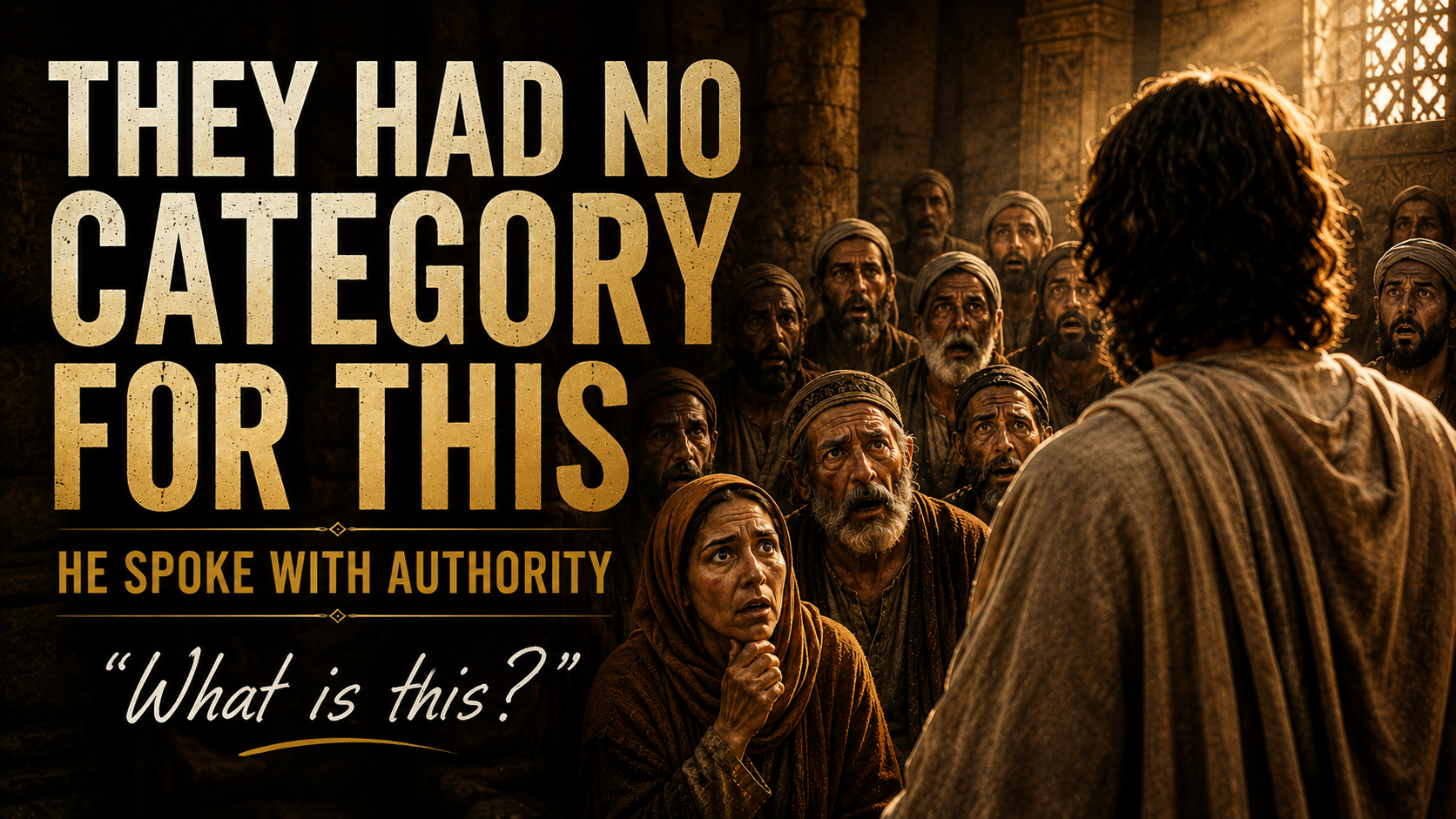
They've connected something important. The authority in the teaching and the authority over the spirit aren't two different things. It's the same authority, showing itself in two different areas.
And that question, "what is this, who is this," is exactly the question Mark wants every reader to sit with. Not what a fascinating religious personality. Not what an interesting first-century teacher. But: what category does this person belong to?
Mark has already told us his answer in 16 words. The question is whether we're prepared to reckon with what that answer requires.
FAQs
Q: What does euangelion mean and why does Mark use it?
Euangelion (good news / gospel) was not originally a religious word. In the first century it belonged to the vocabulary of the Roman Empire, used to announce imperial victories or the birth of an heir. Heralds were sent across the empire to proclaim the emperor's euangelion. Mark's opening move is to take that word and apply it to a Galilean carpenter. The transfer is deliberate and provocative.
Q: Why was Jesus teaching with authority so unusual in the first century?
First-century rabbis taught by citation, always appealing to earlier authorities: "Rabbi Hillel said this, Rabbi Shamai said that." Authority was borrowed and pointed upward. Jesus taught as if he simply had the right to speak on his own terms. The congregation's reaction, described by Mark as exeplasso (struck out of themselves), indicates that this was immediately and disconcertingly different from anything they had heard before.
Q: What does exeplasso mean in Mark 1?
Exeplasso (sometimes transliterated exeplassonto) literally carries the sense of being struck outside oneself. It describes the cognitive dislocation of encountering something that doesn't fit any existing category. It is not the same as being impressed or entertained. It means your mental framework has just had a collision with something it cannot process.
Q: Why did the unclean spirit name Jesus in the synagogue?
In the ancient world, Jewish and Greco-Roman, there was a widespread belief that correctly naming a being gave you leverage over it. This logic appears in Egyptian magical papyri, Greek exorcism manuals, and folk traditions including Rumpelstiltskin. The unclean spirit's identification of Jesus as "the Holy One of God" was not a confession of faith; it was a tactical deployment of the one strategy that was supposed to produce an advantage.
Q: What did Jesus say to cast out the unclean spirit in Mark 1?
Jesus used two Greek words: phimothete (be muzzled or be silenced, a word used for restraining working animals, carrying the sense of a forcible gag) and exelthe (come out, get out). There was no formula, no ritual, no invocation of higher authority. The brevity and directness are themselves significant.
Q: What is ethambethesan in Mark 1:27?
Ethambethesan is the second reaction word Mark uses in this passage, distinct from exeplasso earlier. Where exeplasso describes cognitive dislocation, ethambethesan carries a note of awe combined with something close to dread. The congregation moves from "we can't process this" to "we are in the presence of something that fills us with awe and fear."
Q: What does the Capernaum exorcism tell us about Jesus?
The crowd's response makes the connection explicit: the authority in Jesus' teaching and the authority over the unclean spirit are the same authority. Mark's word is exousia, not merely raw power (dynamis) but the right to act backed by whatever stands behind that right. The Capernaum episode is Mark's first demonstration that his opening claim about Jesus is not rhetorical.
Get a free copy of Mark's Gospel and follow the story yourself: https://live.bible.is/bible/ENGNLH/MRK/1

Slow on the Uptake: Why Jesus Keeps Telling Us What We're Very Slow to Hear Mark 10:32-45