Revelation 1:9–20 The Vision That Keeps the Doors Open

The Most Dangerous Thing That Can Happen to a Church
It's not persecution. It's not cultural pressure. It's not even false teaching — though all of these are real dangers.
The most dangerous thing that can happen to a church is that it loses its vision of who Christ is.
A church can still meet, sing, and preach — and be in serious spiritual decline — if Jesus has quietly been reduced to a comforting idea, a life-coach, or a manageable religious symbol.
That is exactly the situation Revelation is written into. The seven churches of Asia Minor are not pagan temples. They are Christian congregations. And yet Christ will address them with warnings about compromise, complacency, fear, and self-deception.
But before He does any of that, He shows John — and through John, those churches — who He actually is.
Revelation 1:9–20 is not background information. It is pastoral preparation.
1. One of Us (v.9)
John opens by identifying himself not as an authority figure but as a fellow traveller: "I, John, your brother and partner in the tribulation and the kingdom and the patient endurance that are in Jesus."
Three words carry the weight here:
θλῖψις (thlipsis) — literally "pressure." This is real, grinding hardship, not abstract suffering. The word was used for the crushing weight of a millstone. John is saying: I know what you're under.
βασιλεία (basileia) — literally "kingdom/reign." Not a future escape but a present reality. Even in exile on a penal colony, John is participating in Christ's reign.
ὑπομονή (hypomonē) — literally "active endurance." Not passive resignation but determined, forward-pressing faithfulness. Think less of gritting your teeth and more of a long-distance runner who knows exactly where the finish line is.
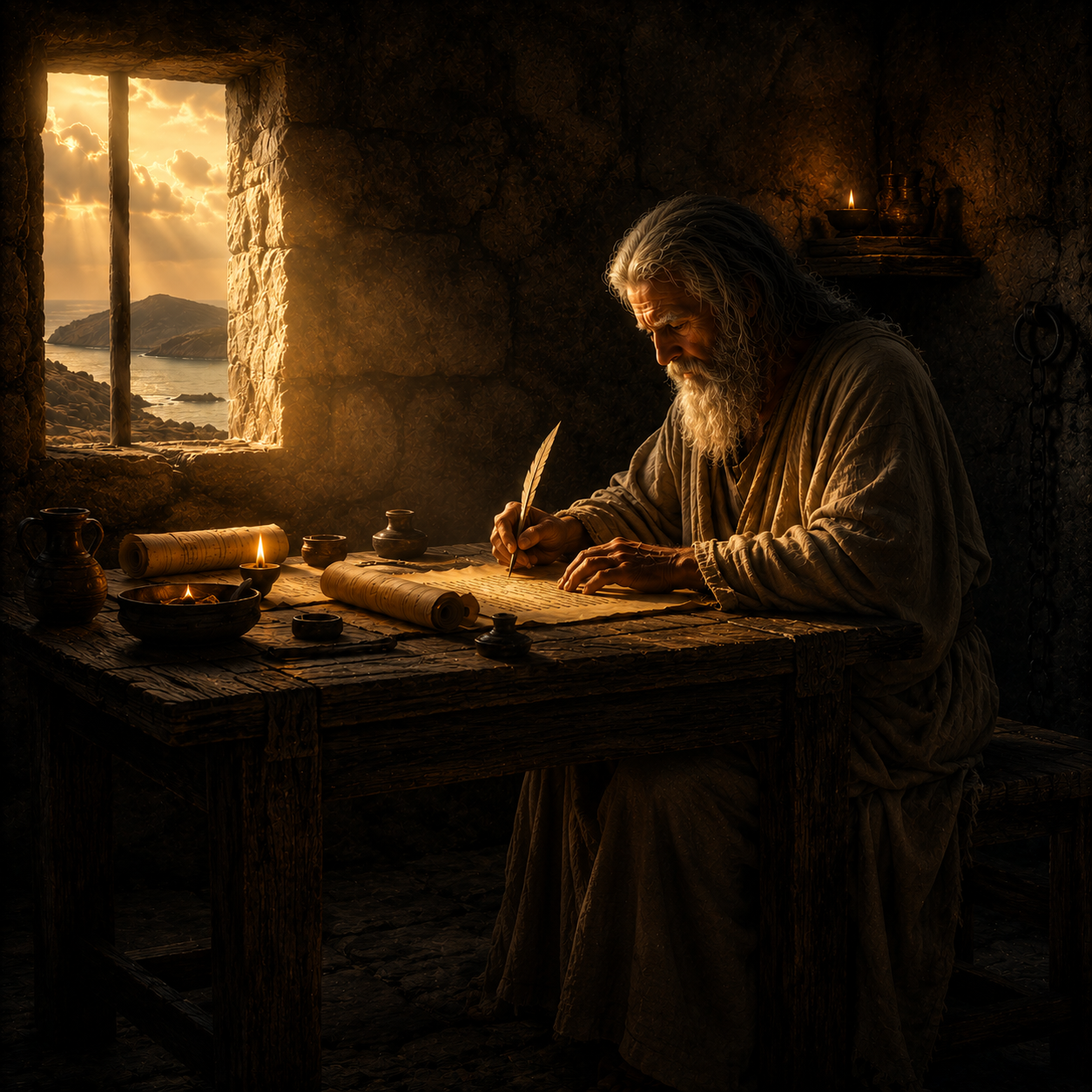
Patmos was not a retreat centre.
It was a Roman penal colony.
John writes from the cost of faithful witness — and the churches will not hear Christ's warnings unless they know the messenger understands that cost.
2. The Prophetic Encounter (vv.10–11)
John was "in the Spirit on the Lord's Day" — and he heard a voice like a trumpet.
This language places John in a long line of prophets. Isaiah in the temple. Ezekiel in exile. Daniel before a heavenly figure. When John says "in the Spirit," he's not describing a mood. He's describing a prophetic state of divine encounter.
The trumpet sound is Sinai language (Exodus 19:16–19). This is the voice that accompanied God's descent on the mountain — the voice that made the whole camp tremble. Not a whisper. Not inspiration. A voice that shakes creation.
The command is blunt: "Write what you see and send it to the seven churches."
Revelation is not given for speculation. It is given for the church's survival.
3. The Vision of the Son of Man (vv.12–16)
John turns to see the voice — and what he sees is both familiar and overwhelming.
One like a son of man, standing among seven golden lampstands.
This is Daniel 7 imagery, but transformed. In Daniel, the Son of Man approaches the throne to receive a kingdom. In Revelation, He's walking among the churches — present, active, searching.
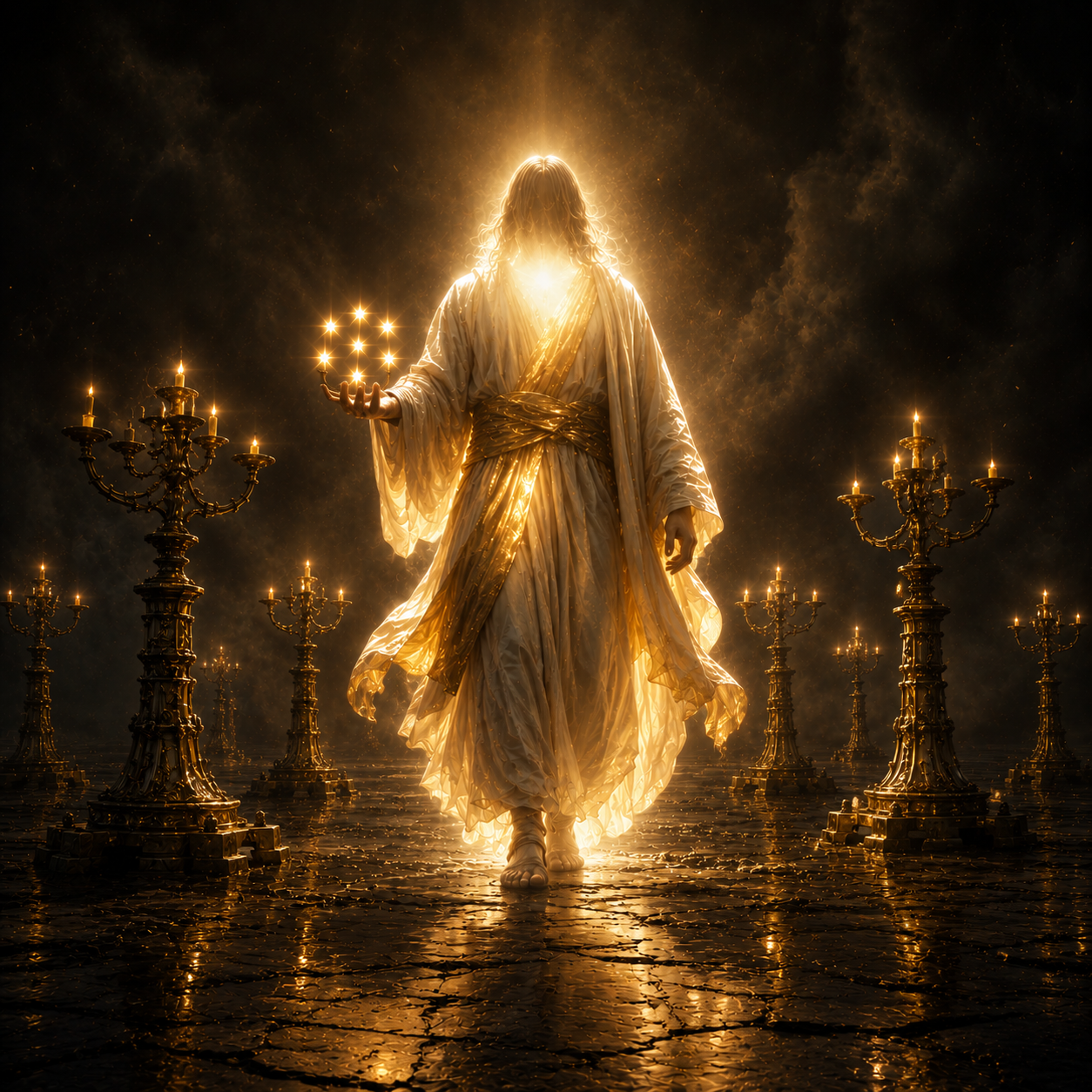
Each detail in the vision draws on the Old Testament and carries meaning:
- The long robe and golden sash recall the high priest's garments (Exodus 28) — Christ as mediator and evaluator.
- White hair echoes the Ancient of Days in Daniel 7:9 — this is divine, eternal wisdom.
- Eyes like flames of fire (Daniel 10) — nothing in the church's life is hidden from His gaze.
- Feet like refined bronze — moral purity and stability. He can tread down what defiles.
- Voice like many waters (Ezekiel 43:2) — the overwhelming, irresistible authority of God's returning glory.
- A sharp sword from His mouth (Isaiah 11:4; 49:2) — Christ rules by His word, not force.
This is the risen Christ in priestly, judicial, divine authority. He doesn't administer His kingdom from a distance. He walks among the lampstands — among the churches — sustaining, exposing, and evaluating.
4. Fear Not (vv.17–18)
When John sees Him, he falls at His feet as though dead.
This is not unusual. It is the universal prophetic response to unmediated divine glory. Isaiah collapsed. Ezekiel fell on his face. Daniel was physically incapacitated. John is responding exactly as every encounter with God in the Old Testament prepared us to expect.
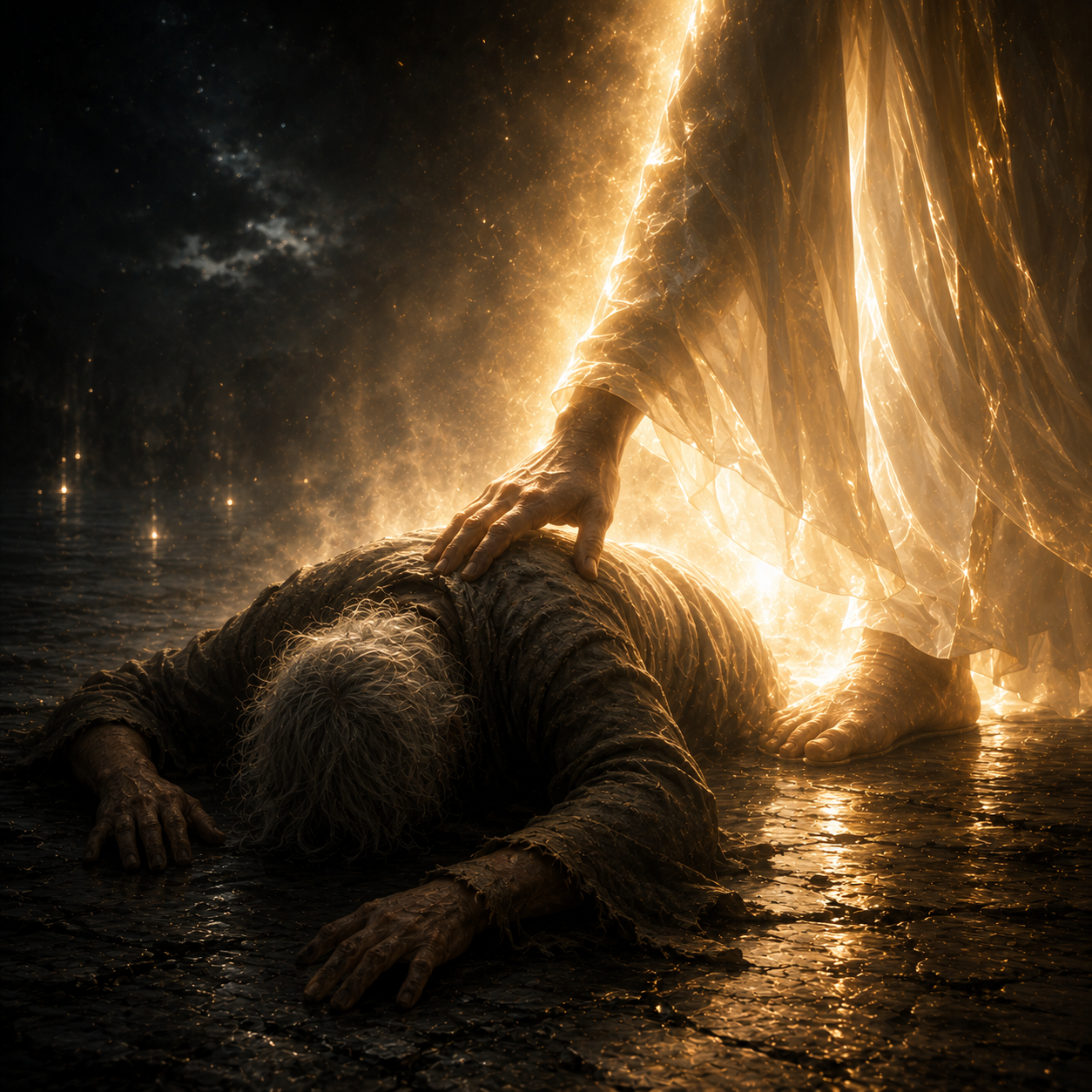
The problem is not that we fear too much. It's that we fear too little — because we've seen too little.
Christ's response is not soft reassurance. It's sovereign declaration:
"I am the First and the Last." This is not a title of honour. It is the language God uses for Himself alone in Isaiah 44:6 and 48:12. When the risen Jesus says this, He is identifying Himself with Yahweh, the God of Israel.
"I died, and behold I am alive forevermore." Death did not expose His limits. It revealed His authority.
"I have the keys of death and Hades." Keys are symbols of authority. Christ does not merely promise life beyond death — He governs death itself.
For churches facing persecution or exhaustion, this is not abstract theology. It is defiant, grounded hope.
Why Does This Matter for Us?
Where Christ is small, sin becomes manageable, compromise becomes reasonable, fear becomes decisive, and endurance becomes impossible.
Revelation does not begin by telling the churches what to do. It begins by showing them who stands among them.
Churches today face the same danger: when Christ becomes a brand rather than a Lord, when worship becomes performance rather than encounter, when doctrine becomes abstraction rather than submission.
The answer is not better strategy. It is restored vision.
"I saw a new vision of Jesus, One I'd never seen here before, Beholding in glory so wondrous, with beauty I had to adore. I stood on the shores of my weakness, and gazed at the brink of such fear; 'twas then that I saw him in newness, regarding him fair and so dear." — Vernon Higham
John fell as though dead — and was raised to write ... for the benefit of those churces in the next two chapters that are facing threats to their very existence.
The church will not recover its witness until it recovers its vision. And it will not recover its vision until it encounters Christ as He is — not as we wish Him to be.
The Question This Passage Leaves With Us
Have we truly seen the Lord who walks among us?
Because when the church sees Him, she may stumble — but walking with such a God, she will also rise, endure, and bear faithful witness until He fully comes.
FAQs
What is Revelation 1:9–20 actually about?
It is a vision of the risen Lord Jesus given to the apostle John while exiled on the island of Patmos. Before Christ addresses the seven churches of Asia Minor with words of warning and correction in chapters 2 and 3, He first shows John — and through John, those churches — who He actually is: the living, searching, sovereign Lord who walks among His people in priestly authority and divine power.
Why does John fall down as though dead when he sees Christ?
This is not odd. It is the consistent response of every prophet in the Old Testament who encounters unmediated divine glory. Isaiah, Ezekiel, and Daniel all collapse in similar ways. John is not behaving unusually or dramatically — he is responding exactly as the Old Testament pattern leads us to expect. The vision of Christ in His full reality is not comfortable. It is overwhelming.
What does "I am the First and the Last" mean?
It is not simply a title of honour. It is language God uses for Himself alone in Isaiah 44:6 and 48:12, where it functions as an exclusive claim to divine identity — the One who stands at the absolute boundary of all reality. When the risen Jesus uses this language of Himself, He is making a direct identification with Yahweh, the God of Israel.
Why does this passage matter for churches today?
Because the dangers facing the seven churches of Asia Minor — compromise, complacency, fear, exhaustion, and a quietly diminished vision of Christ — are not unique to the first century. Where Christ becomes small, sin becomes manageable and endurance becomes impossible. This passage exists to restore the church's vision of who actually walks among them.
What does it mean that Christ "holds the keys of death and Hades"?
Keys in the ancient world were symbols of authority and control. To hold the keys of death and Hades is to claim mastery over the ultimate human fear. Christ is not merely promising life beyond death — He governs death itself. For any believer or congregation facing suffering or threat, this is not abstract theology. It is defiant, grounded hope.
Take Up Your Cross: What Mark 8:27-38 Says About Following Jesus as Messiah